


Creative Growth Platform
Agora
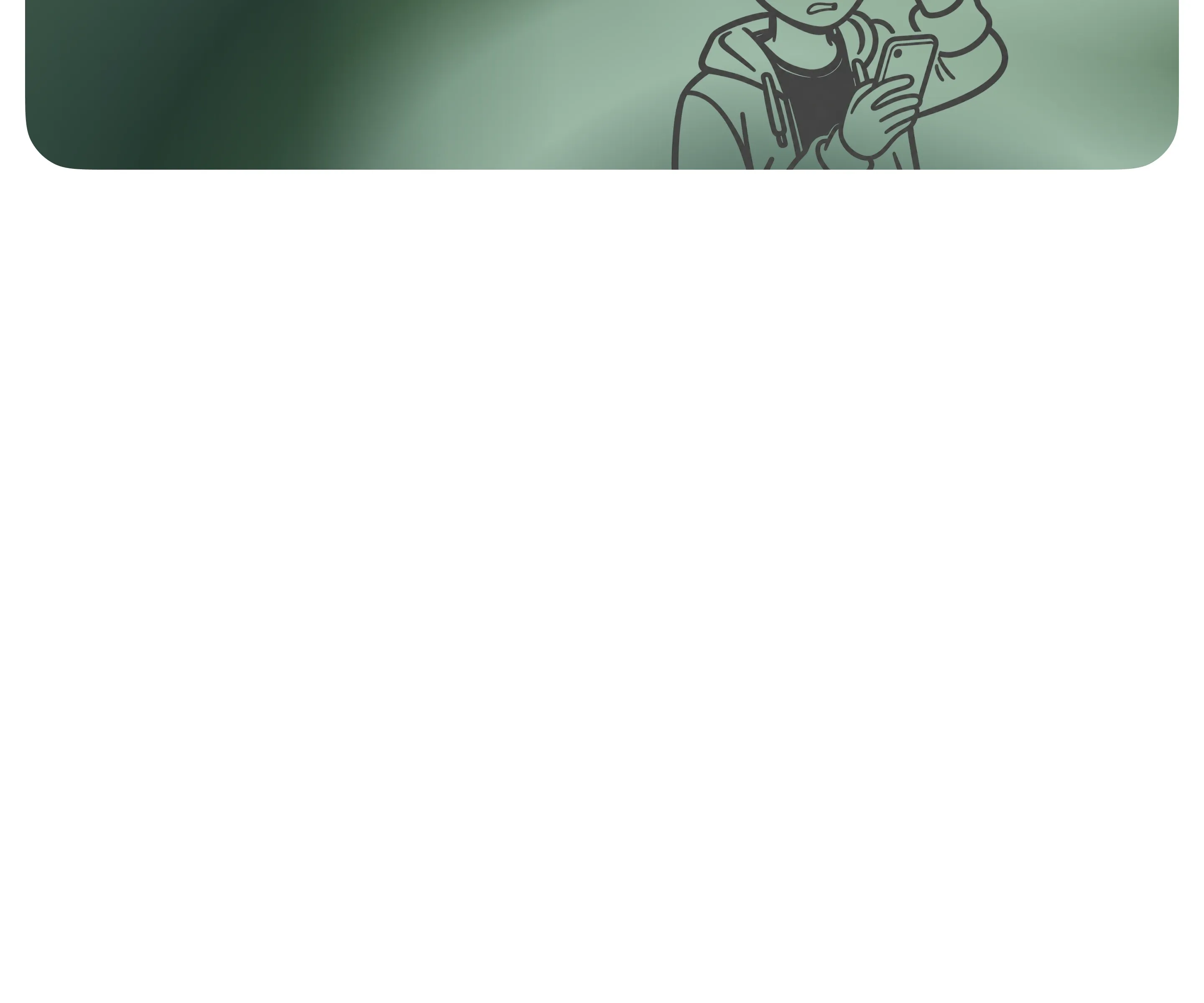
The algorithm doesn’t care that you’re figuring something out. It only rewards you when you’ve already got the answer.
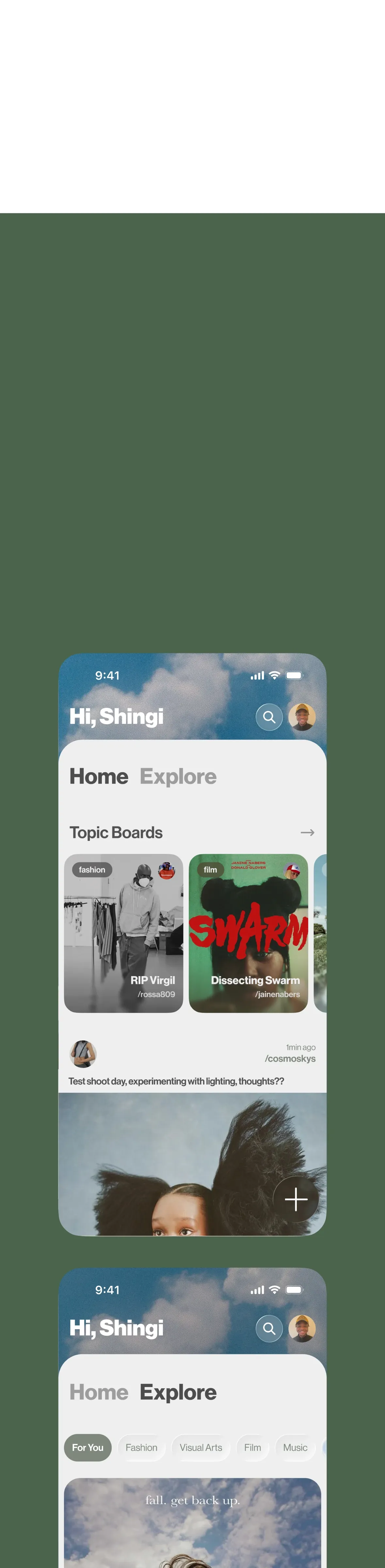
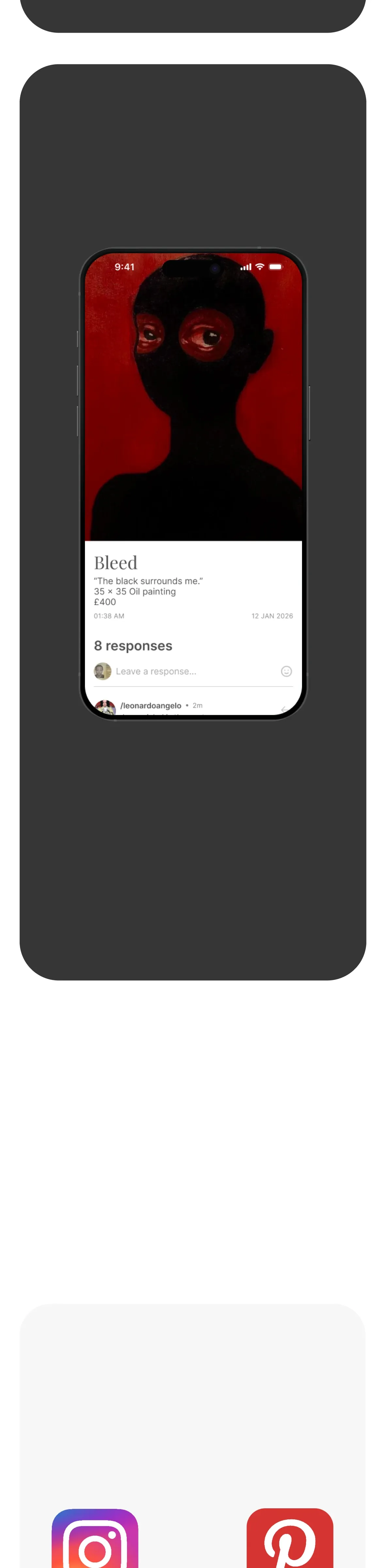
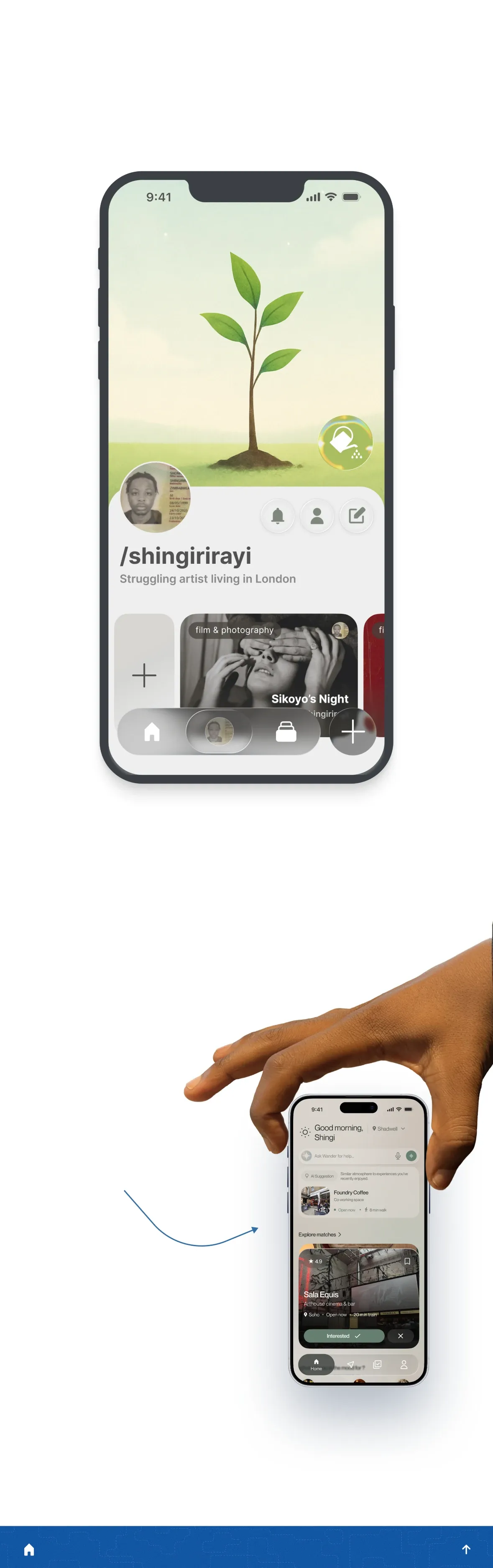
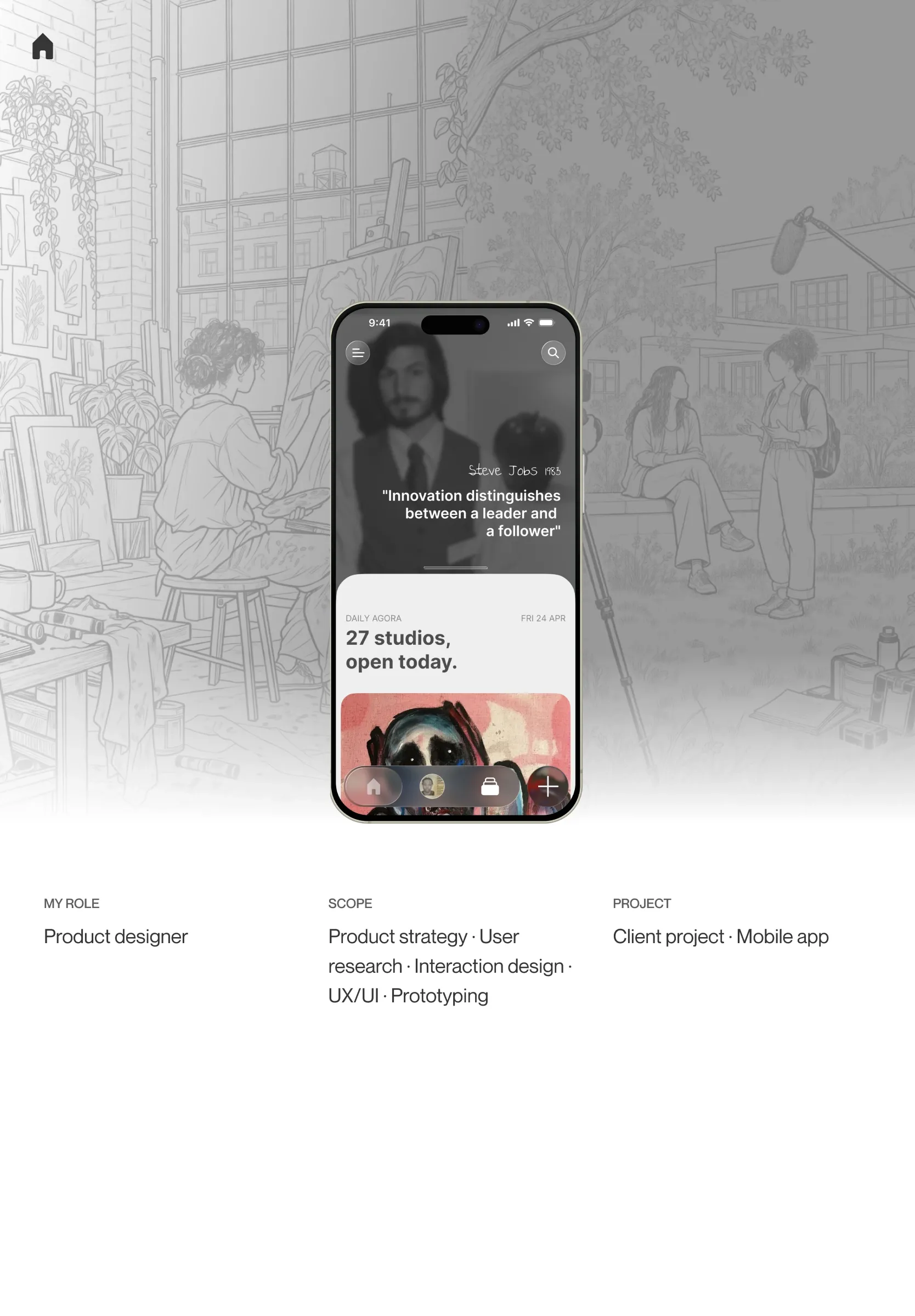
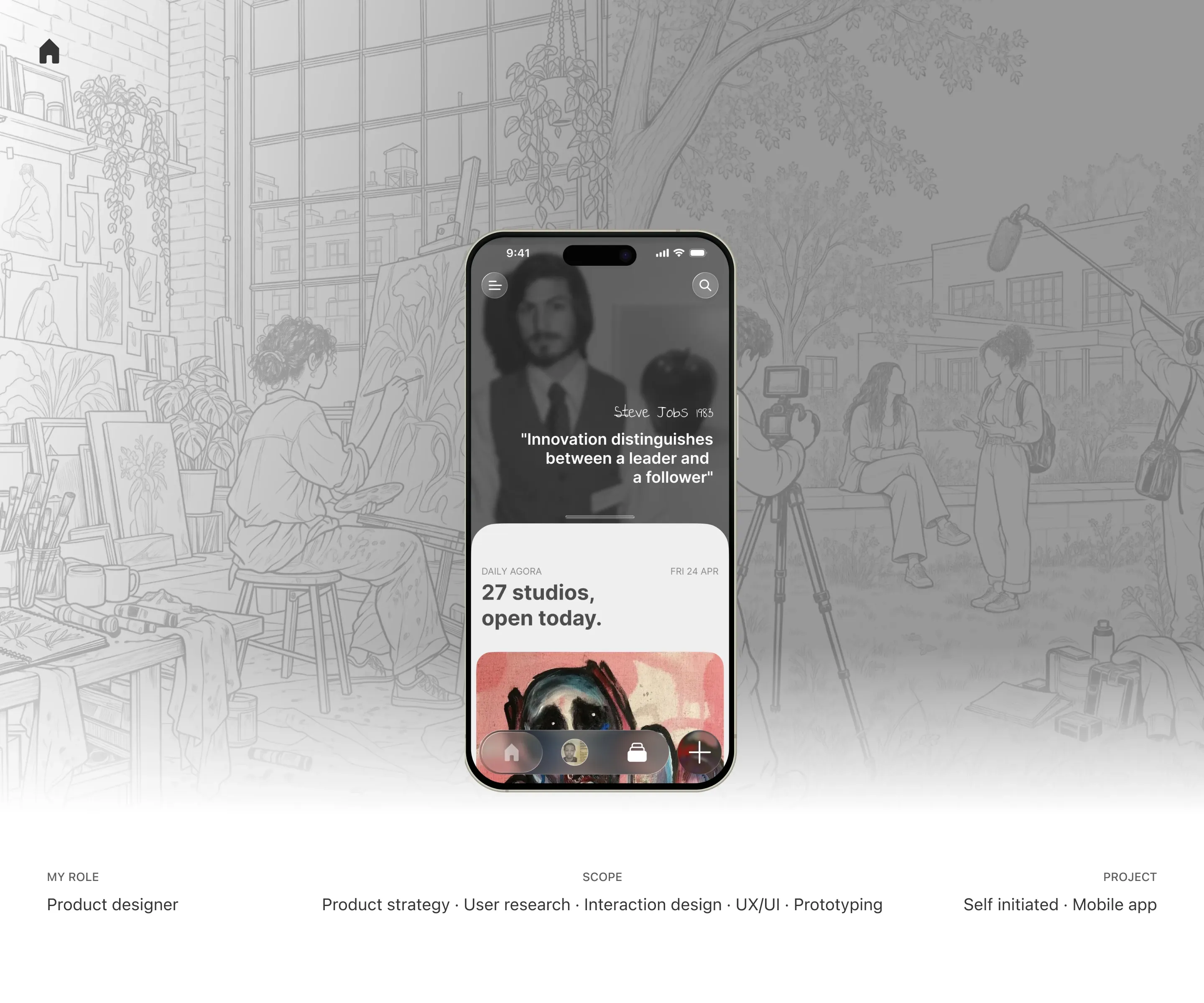
Agora is a creative growth app where people document ideas, develop creative projects, and reflect through evolving spaces called Studios, Topic Boards, and the Gratitude Tree.
The product challenged where value is placed across the creative journey.
INITIAL DESIGN
Support Growth Before Outcome
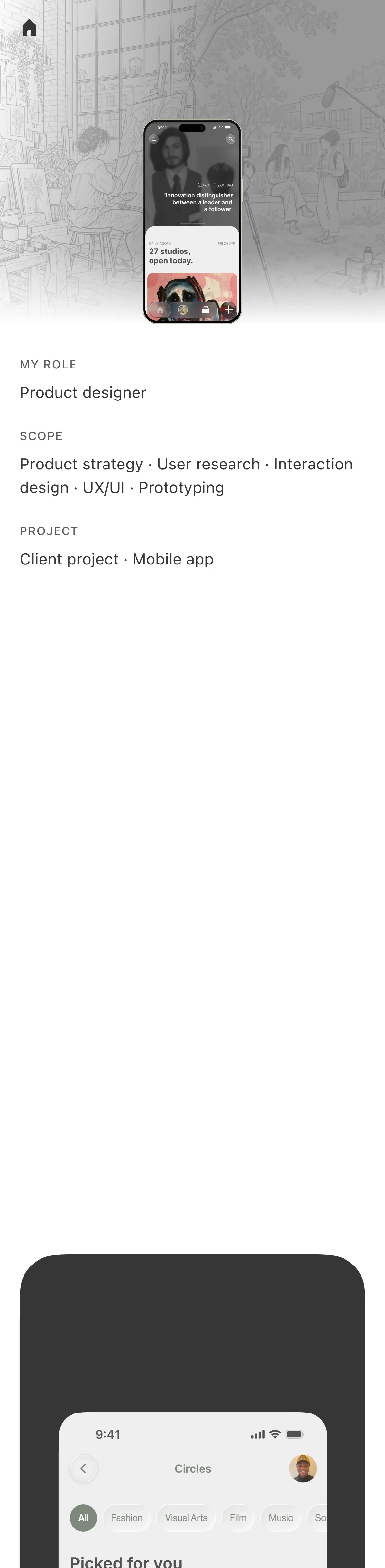
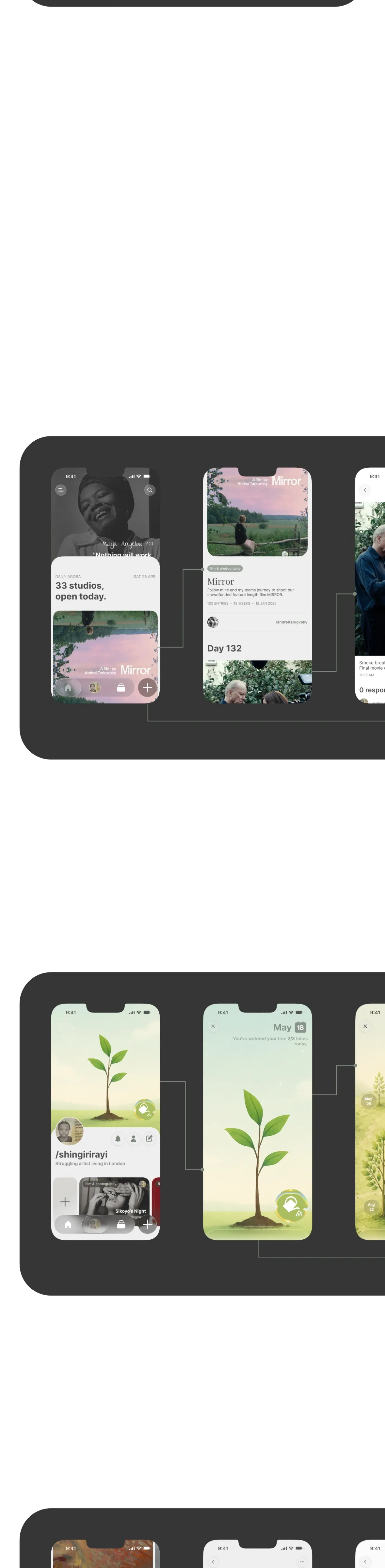
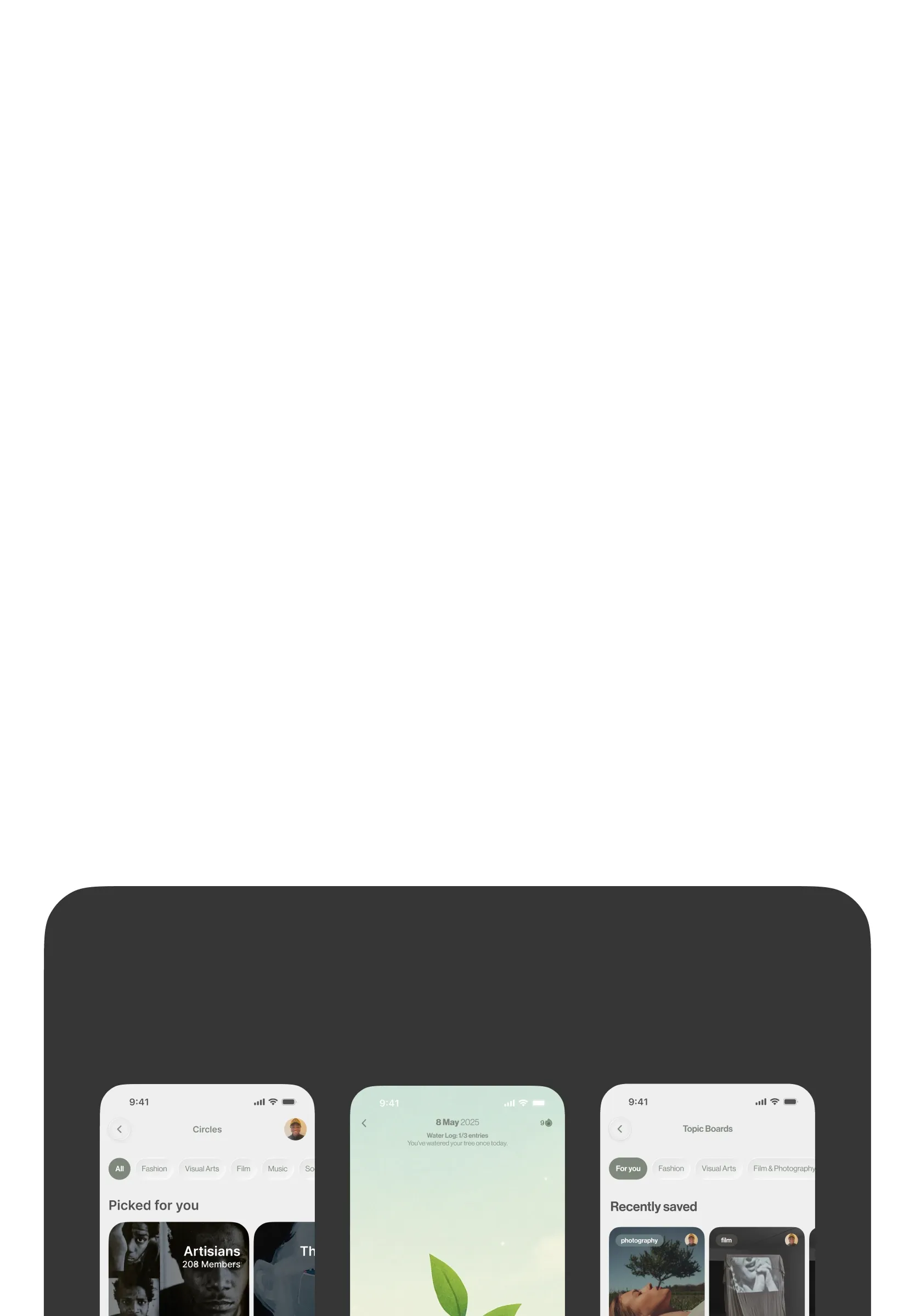
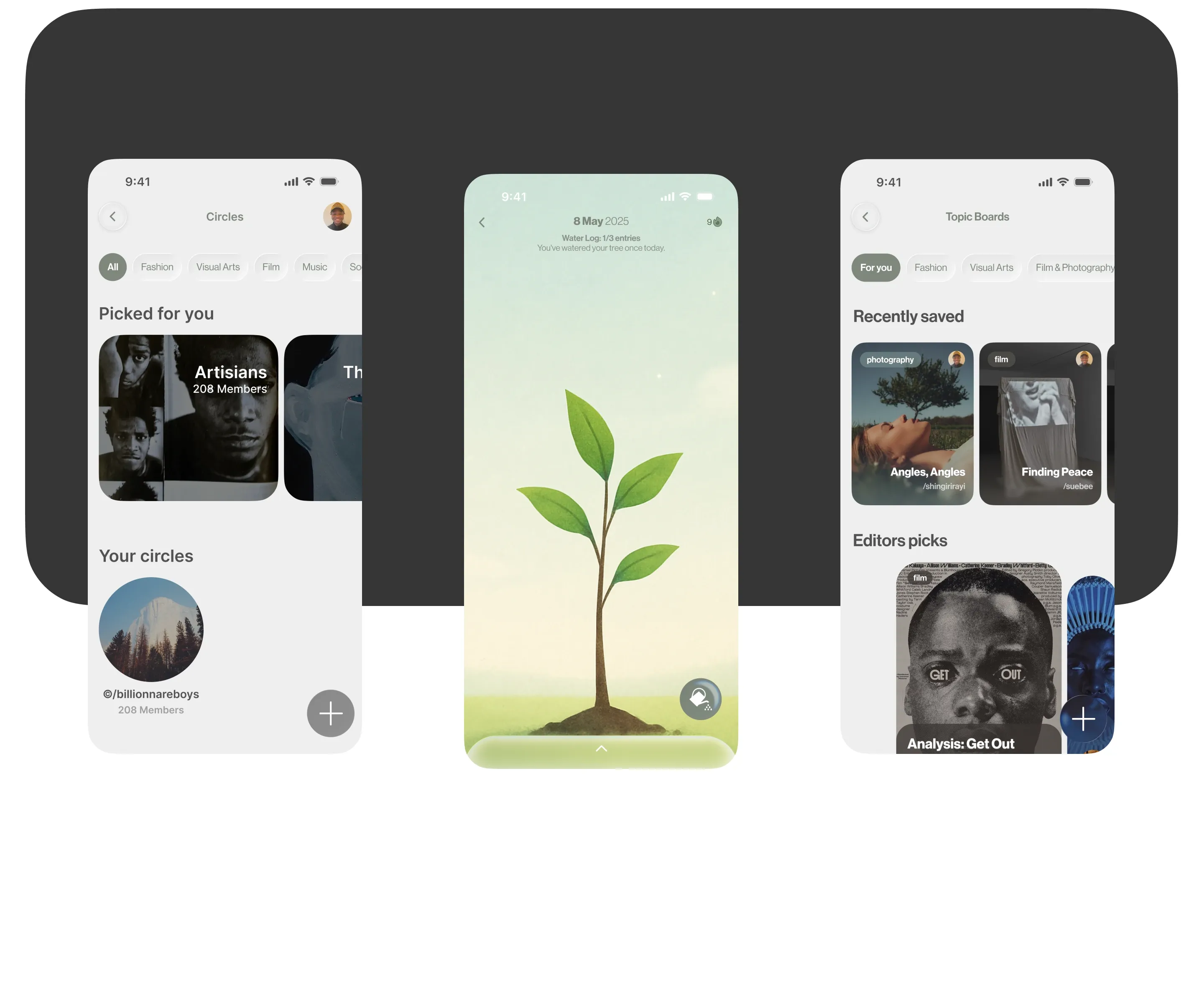
Agora afforded growth through three modes: dialogue, reflection, and perspective.
Circles = Community Growth.
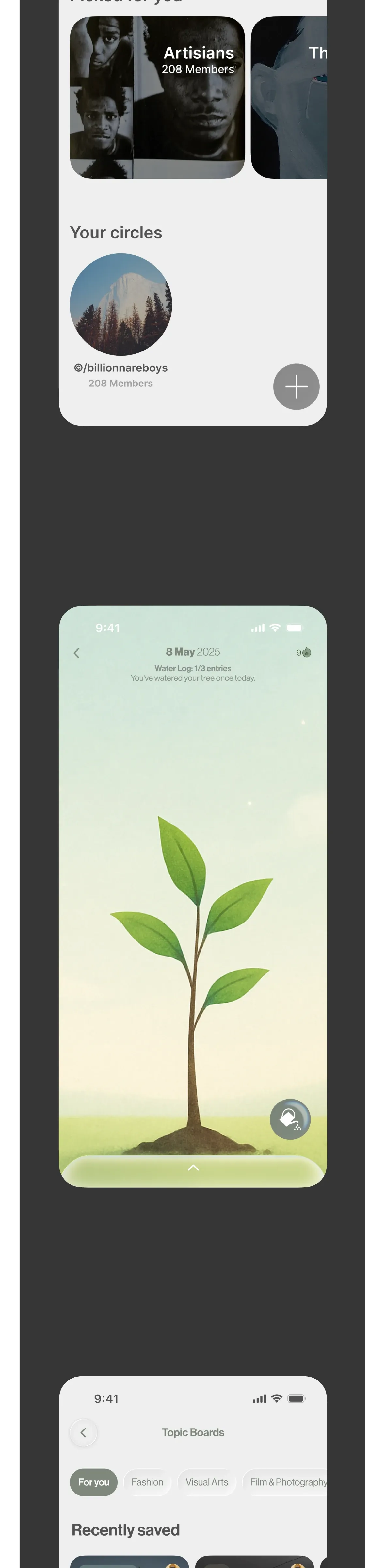
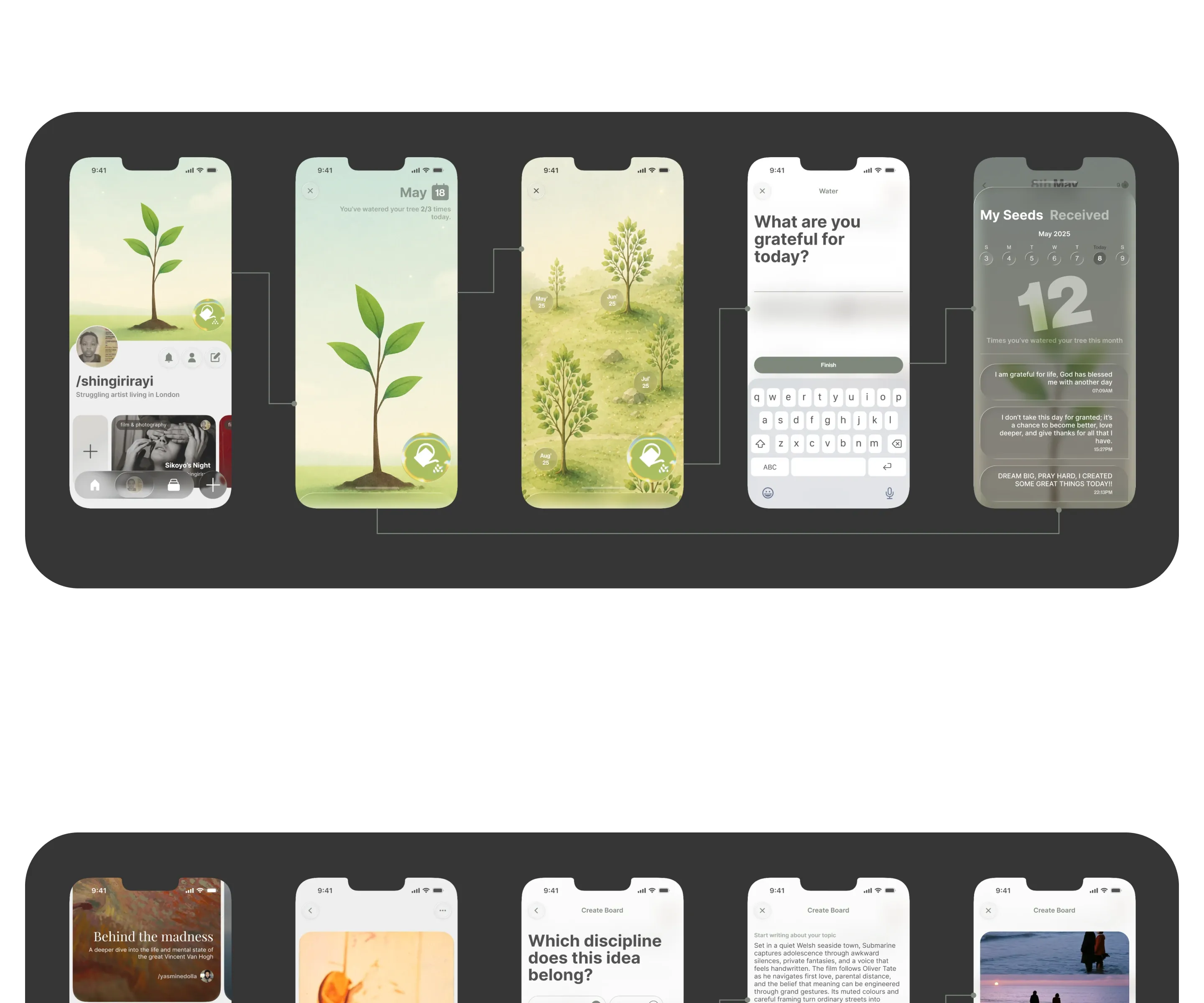
Gratitude Tree = Internal Growth.
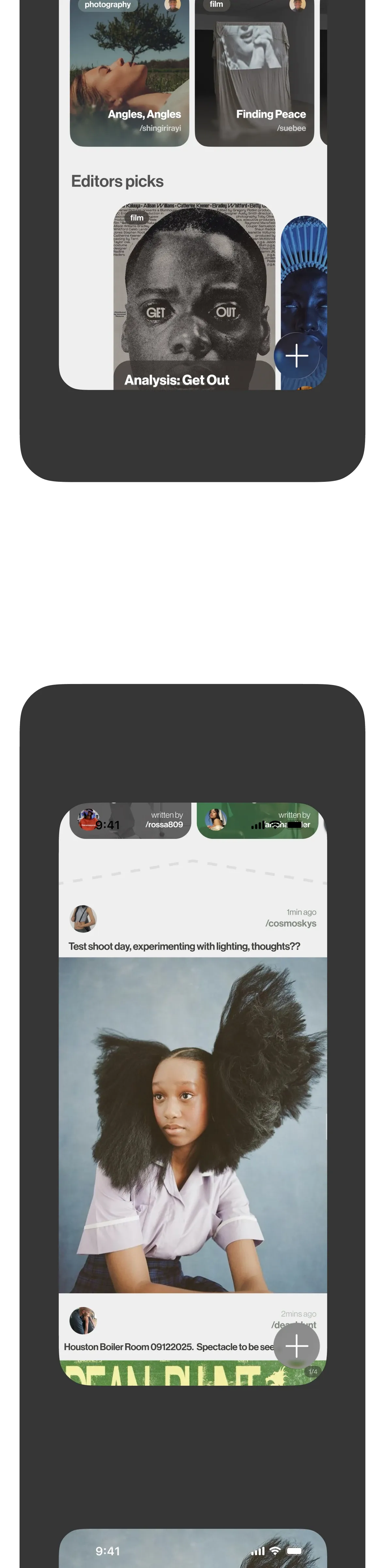
Topic Boards = Intellectual Growth.
INITIAL DESIGN
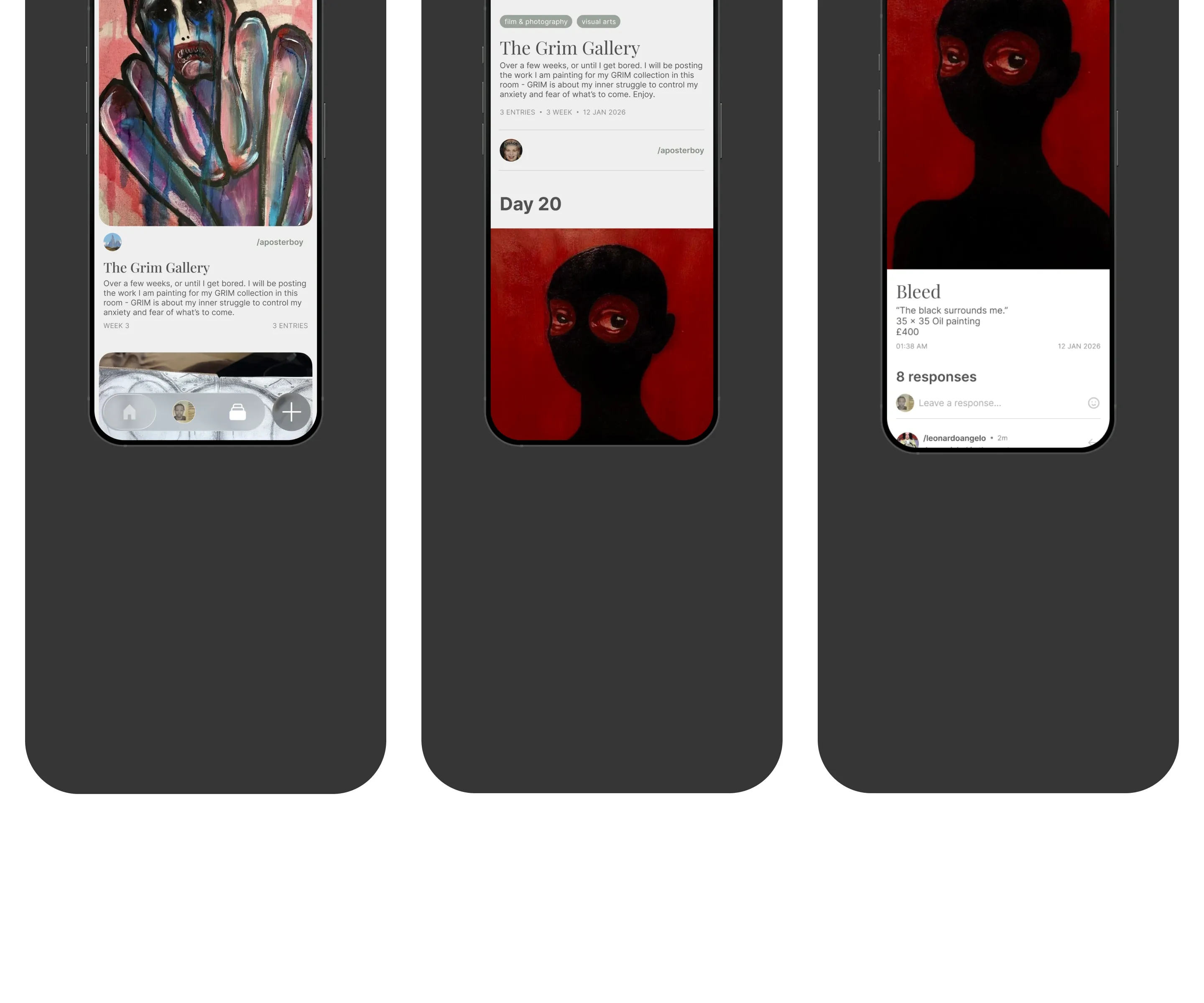
Work Before Validation
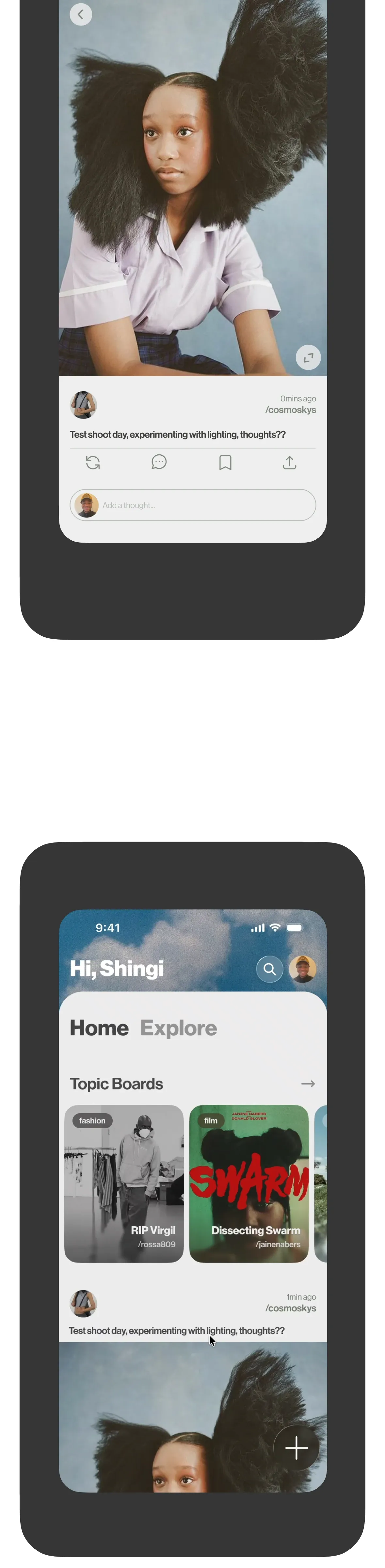
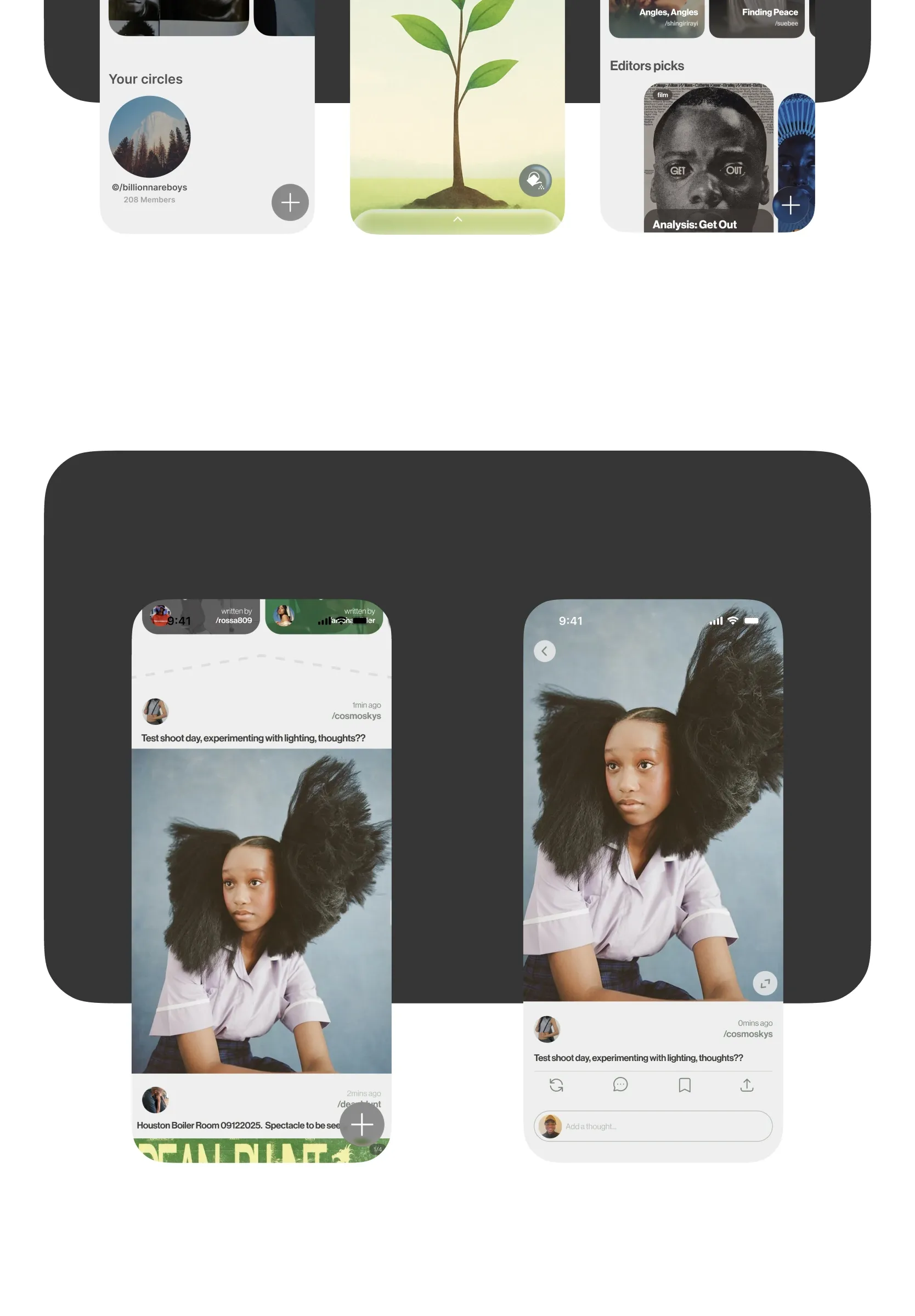
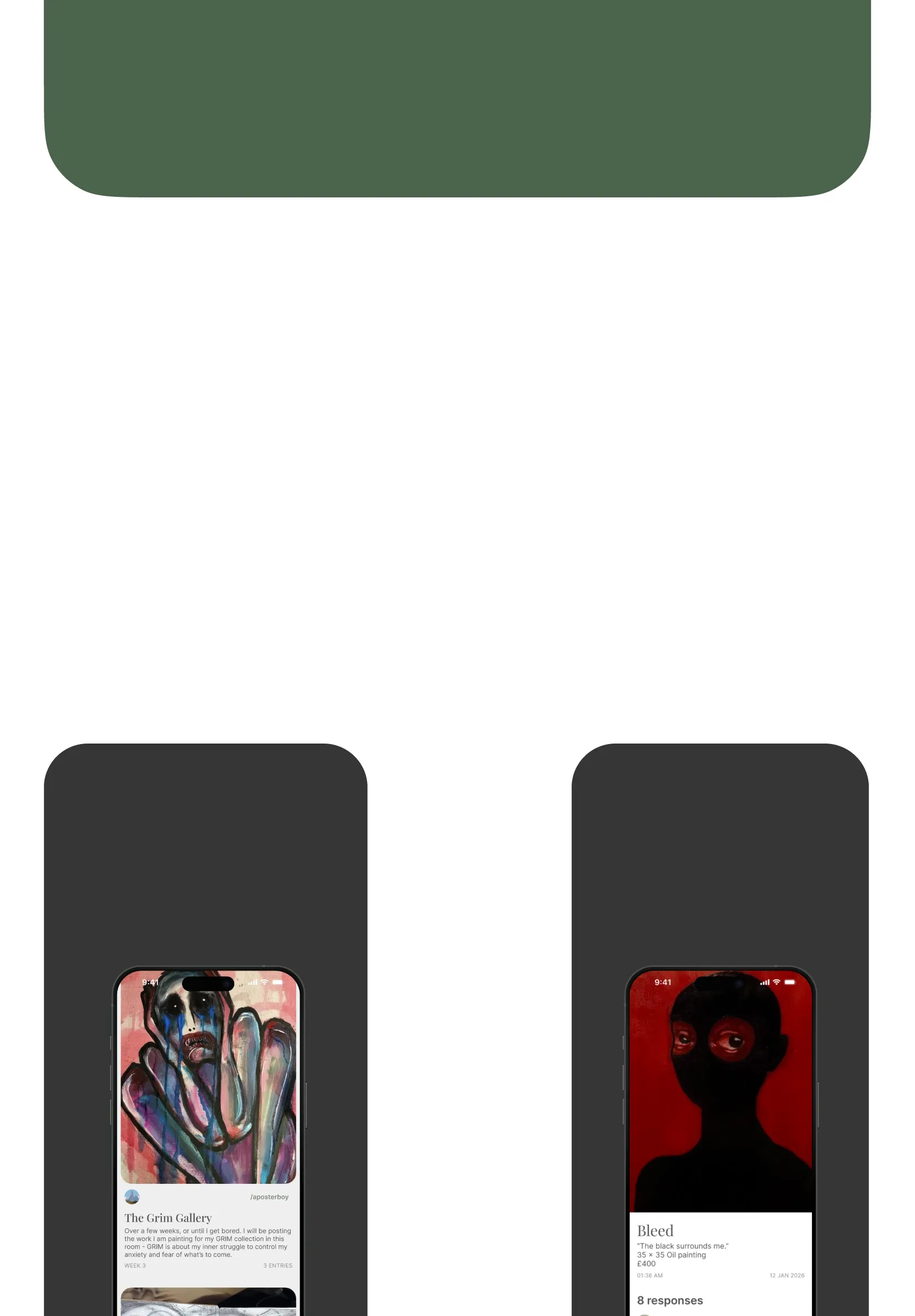
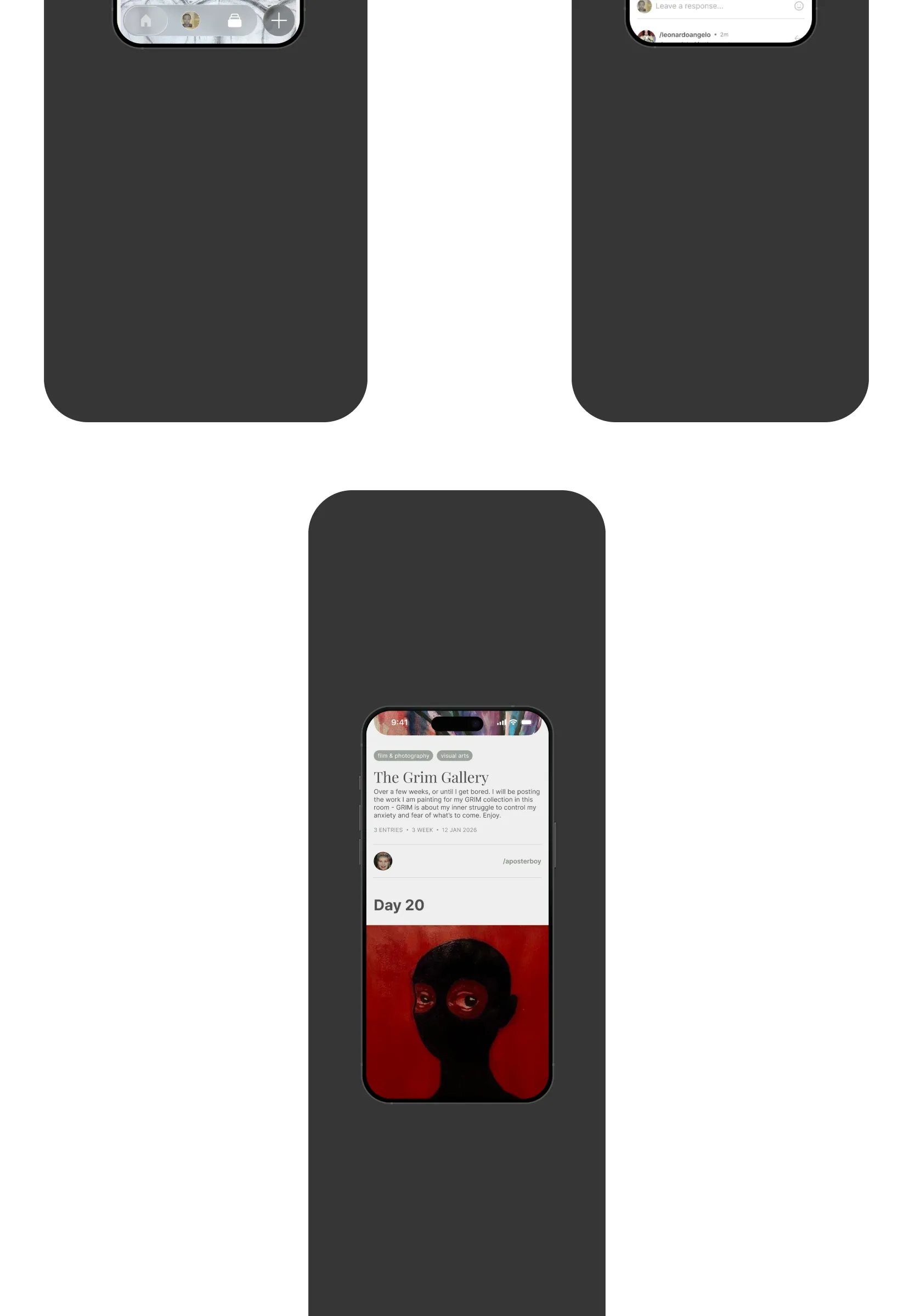
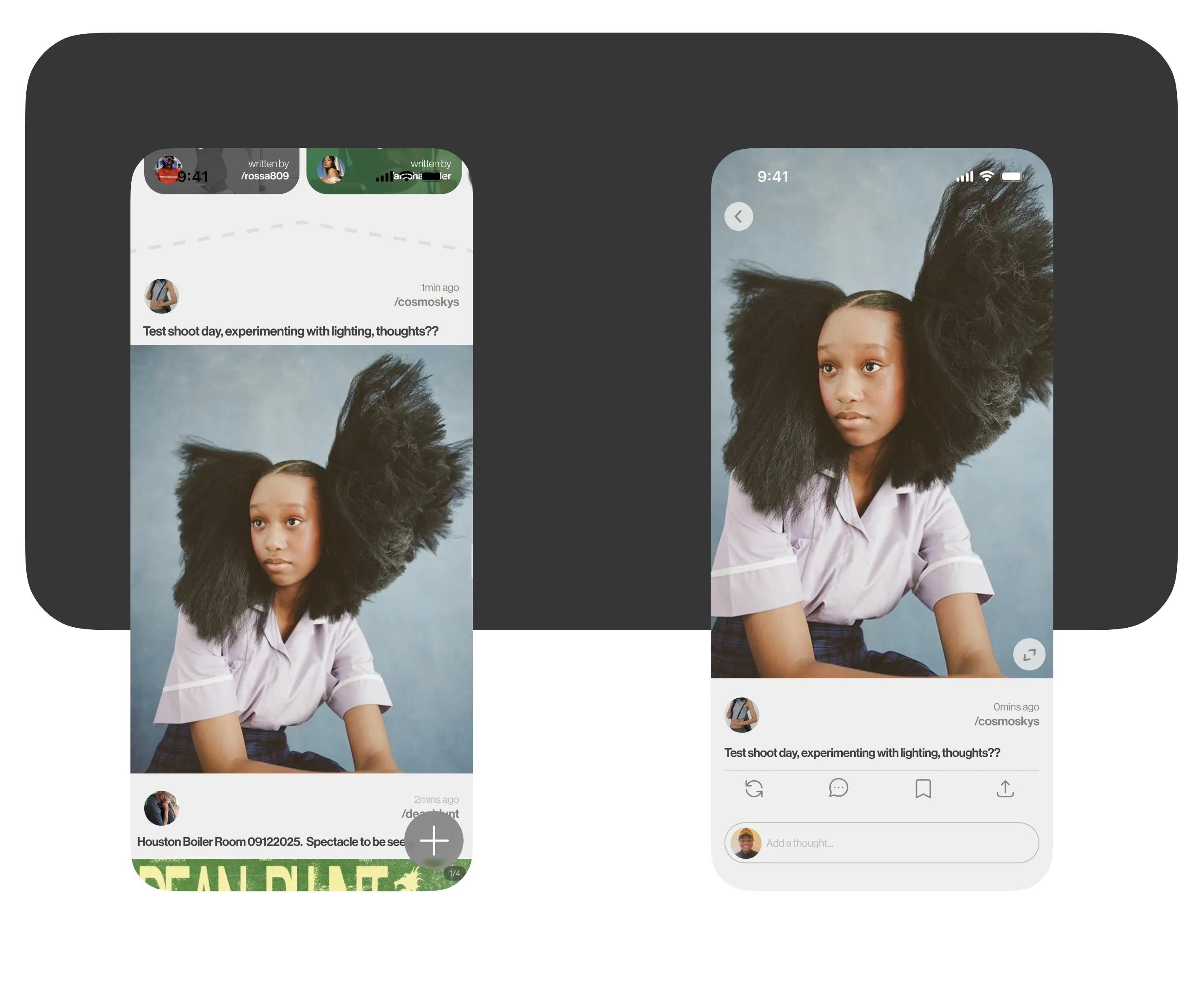
Likes were removed entirely, while other performance signals were moved deeper inside.
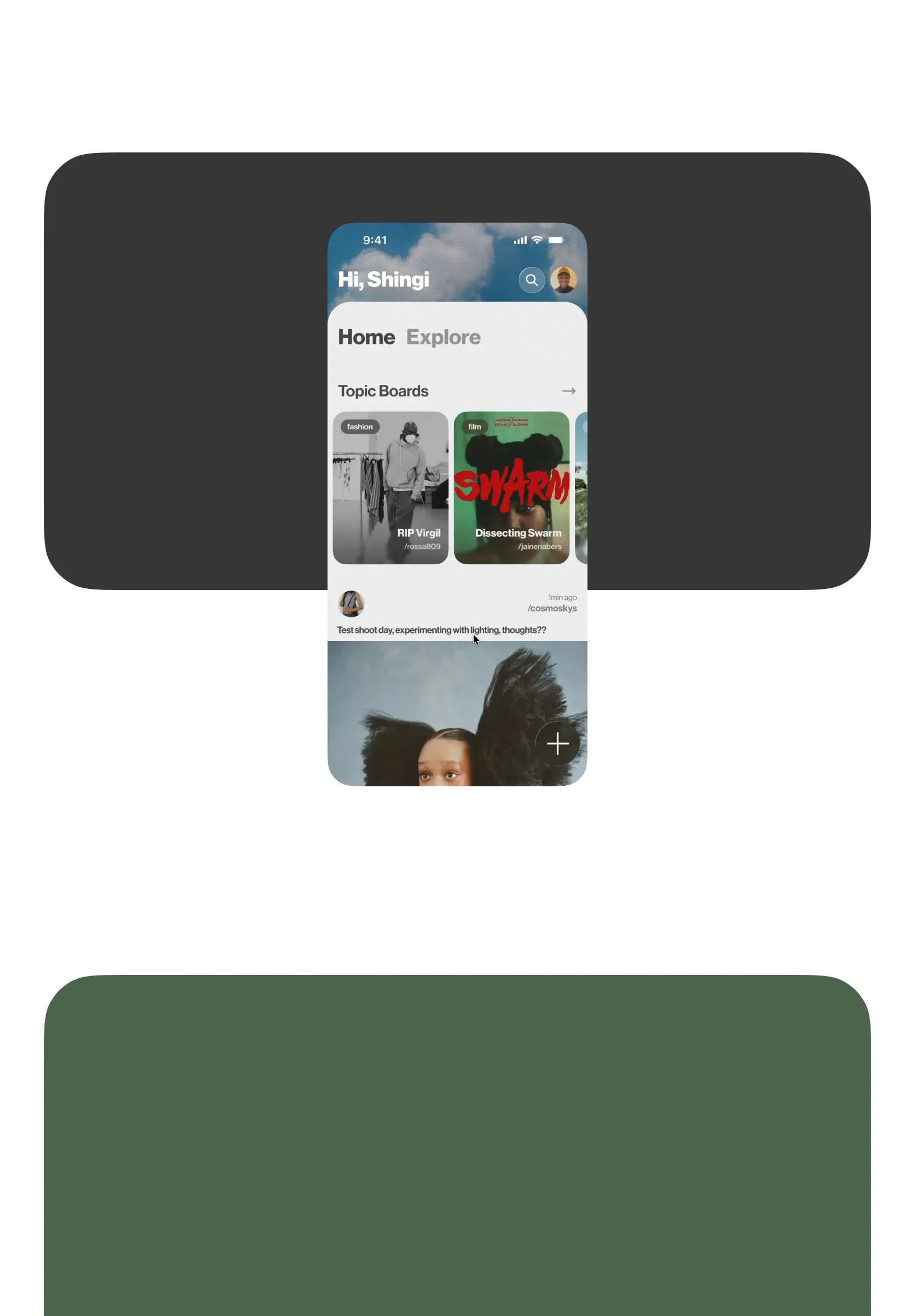
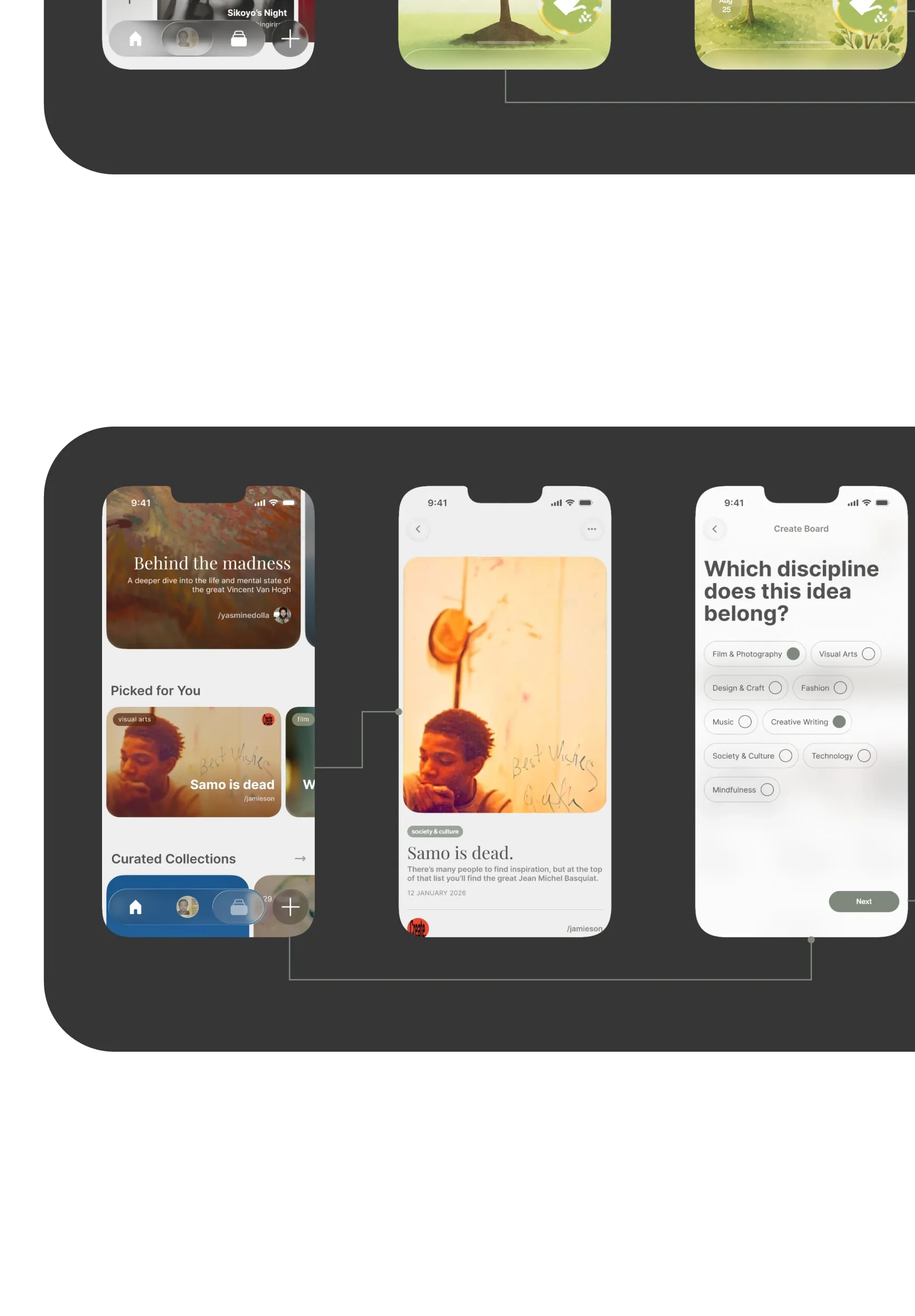
Feed
Inside Post
INITIAL DESIGN
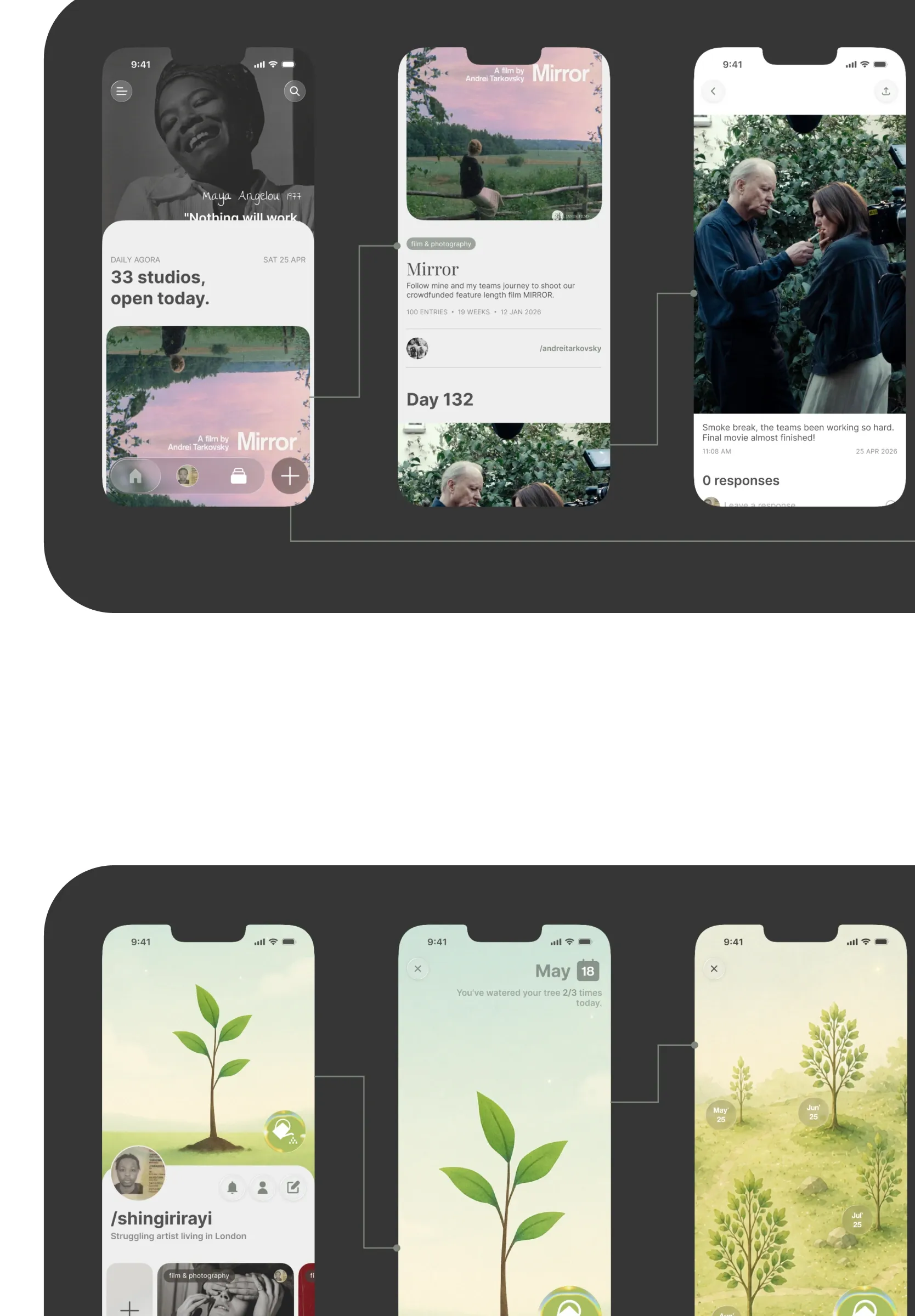
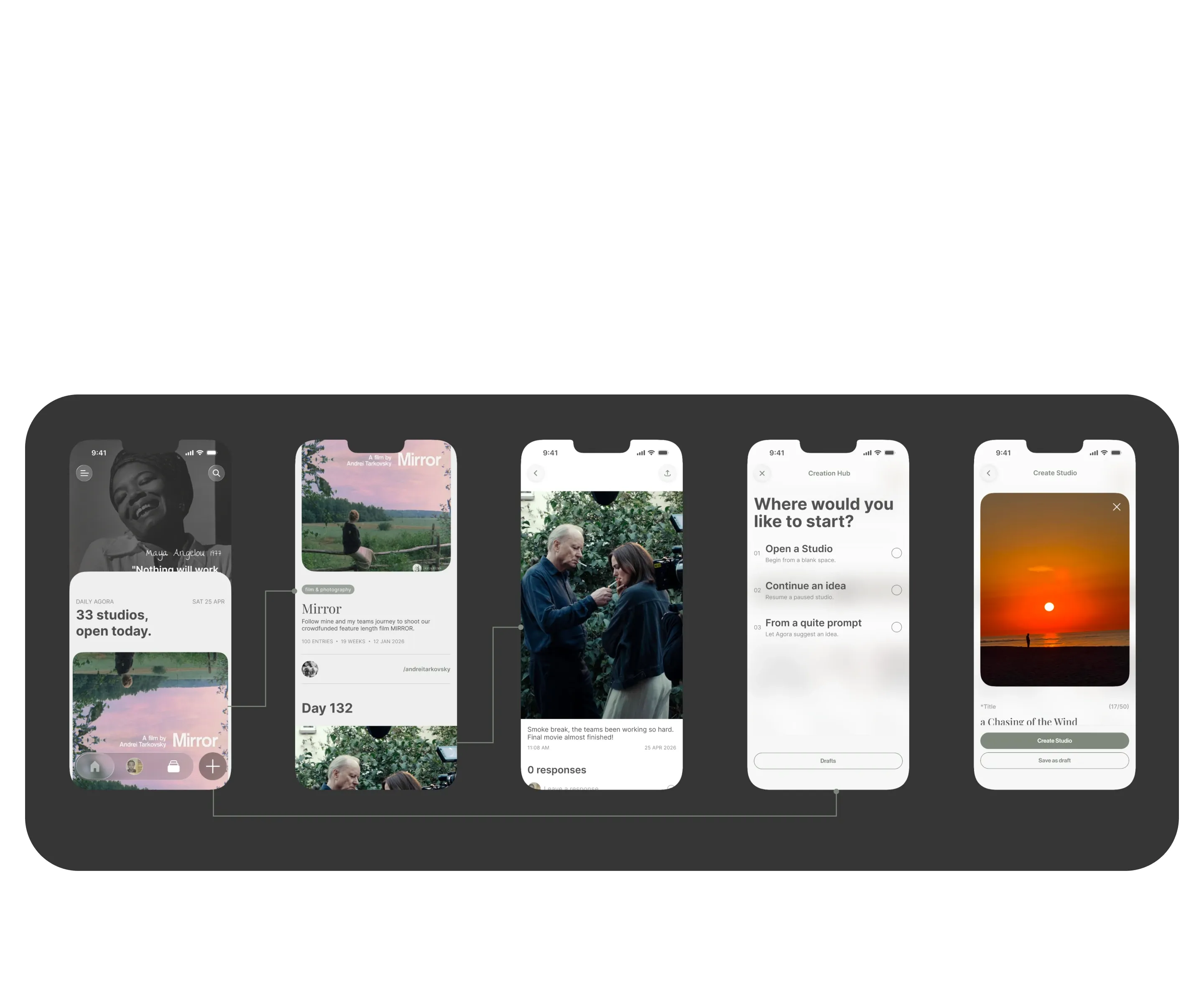
Move With Intention
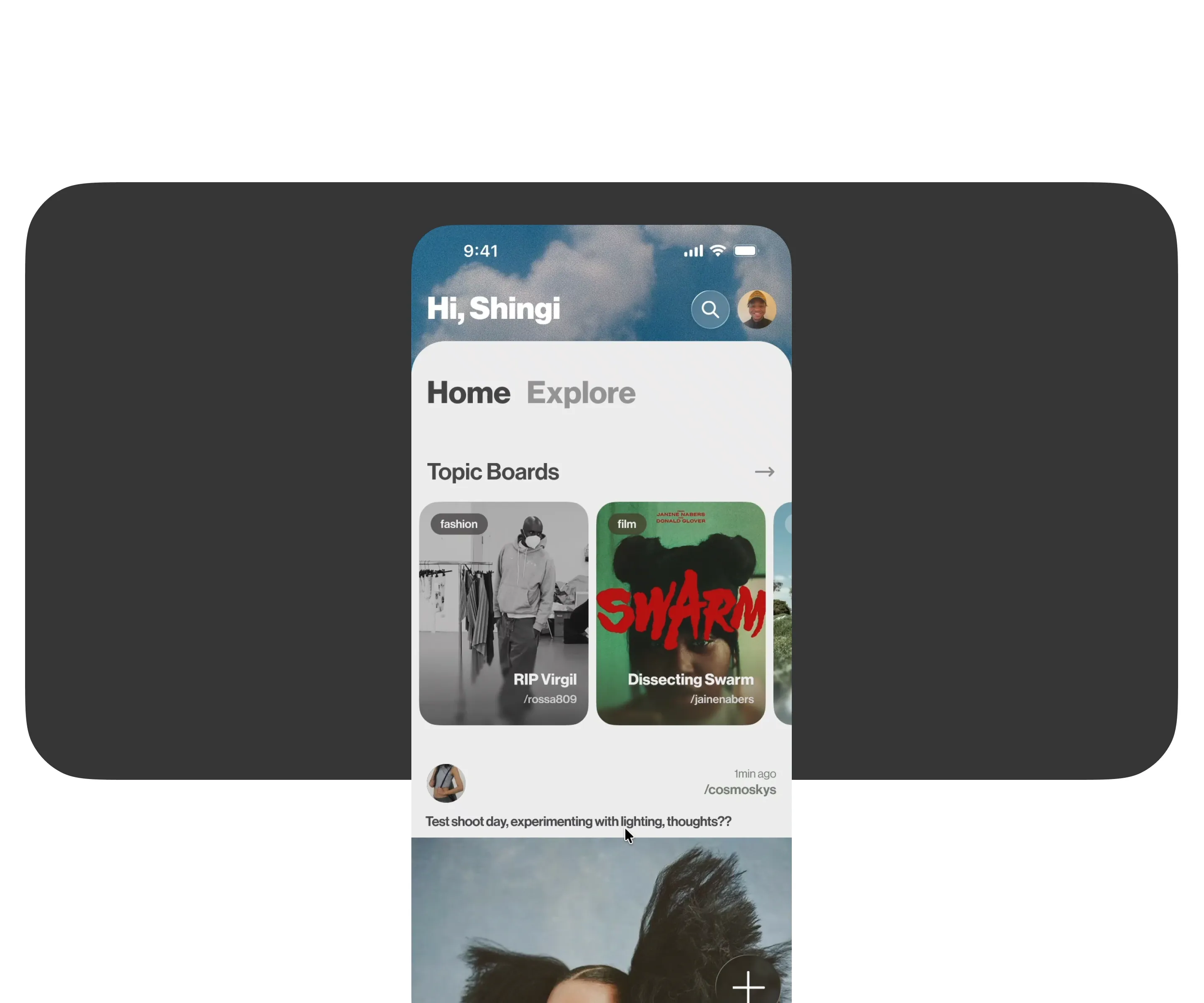
With no nav bar, Agora used guided screen-to-screen flow to reduce passive switching and slow the experience.
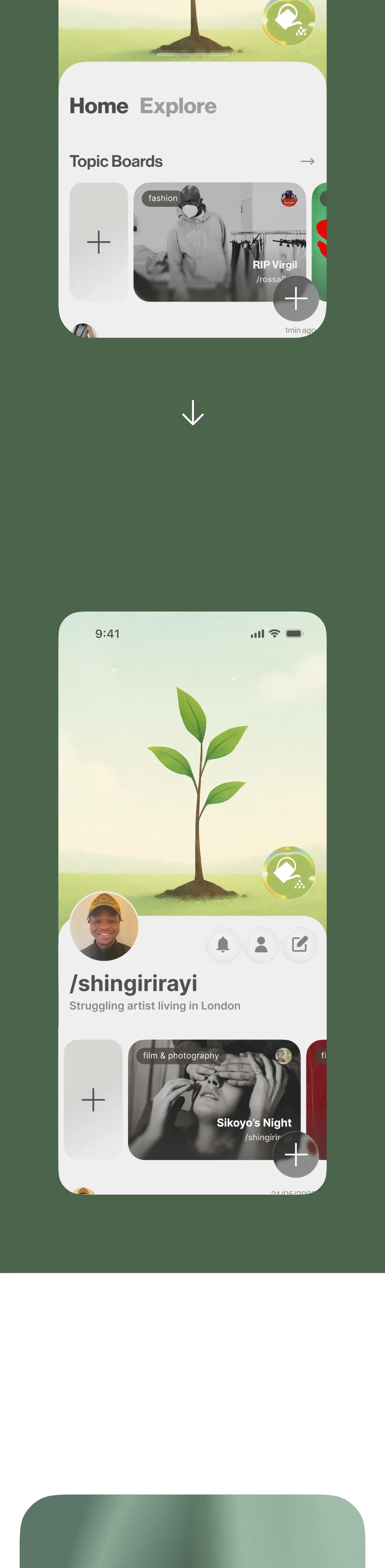
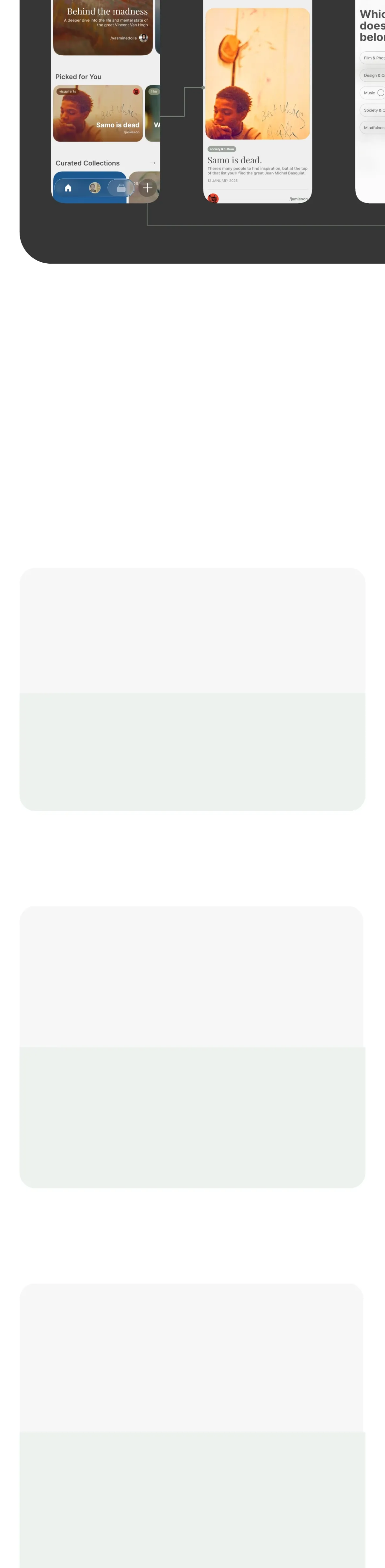
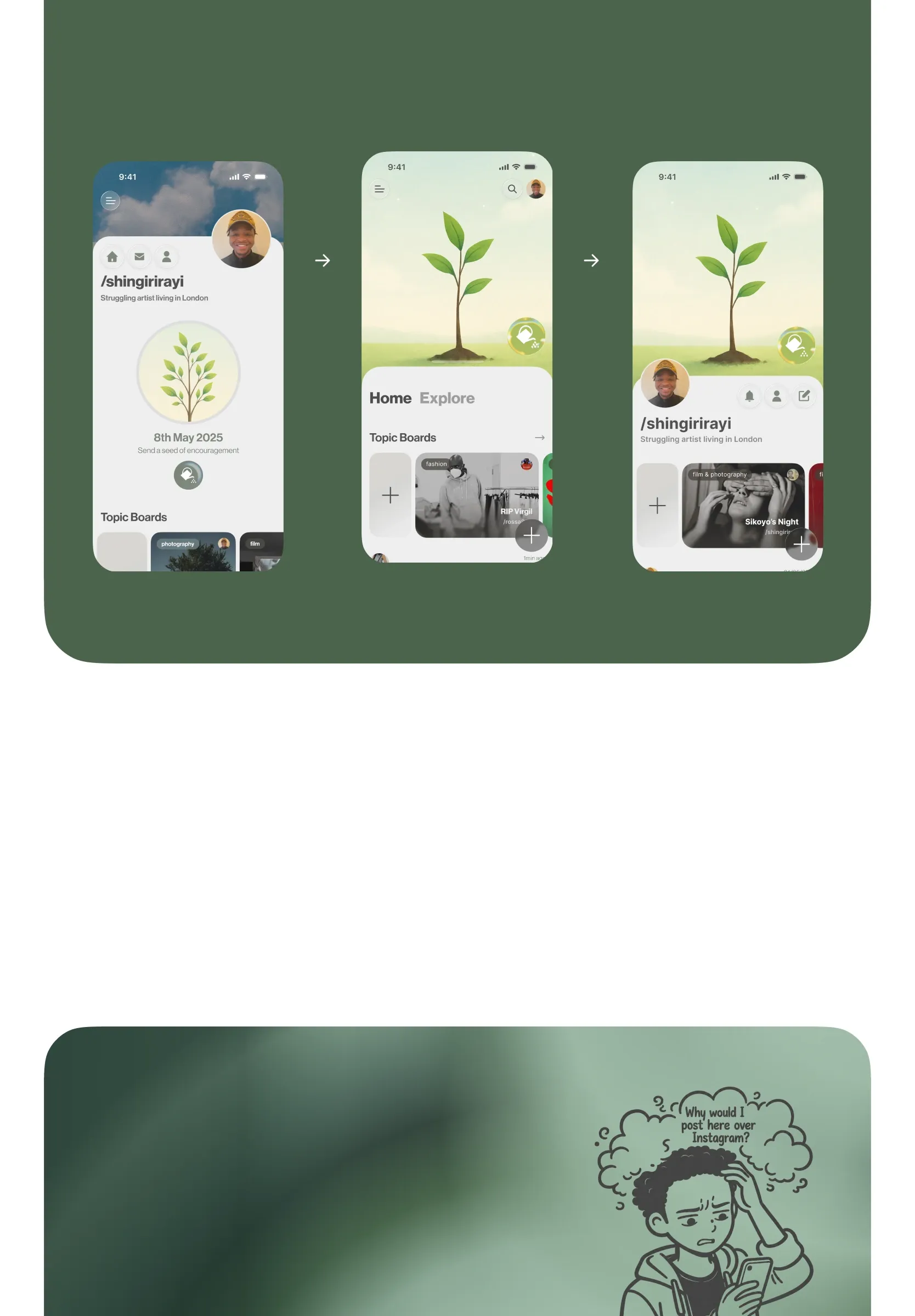
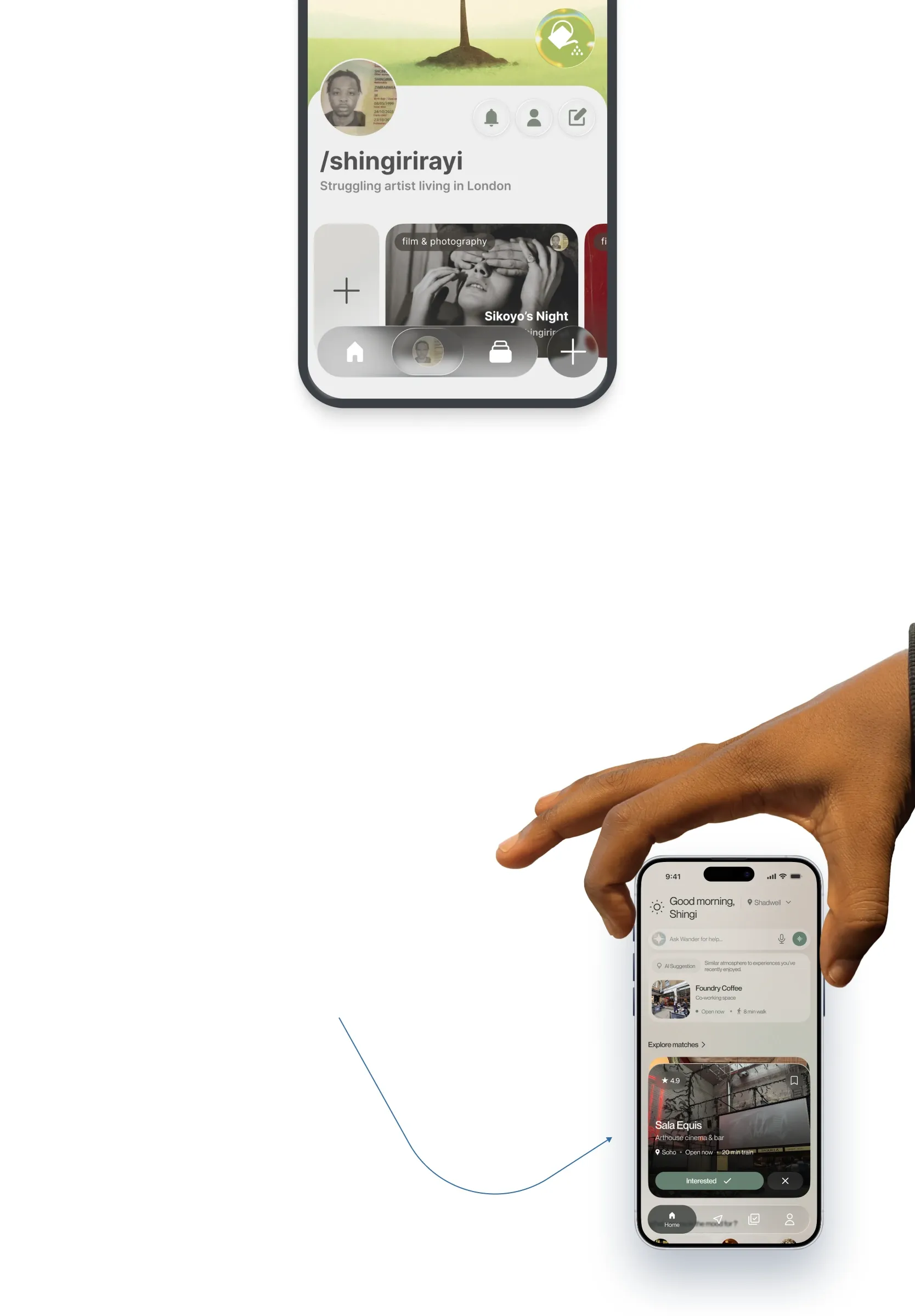
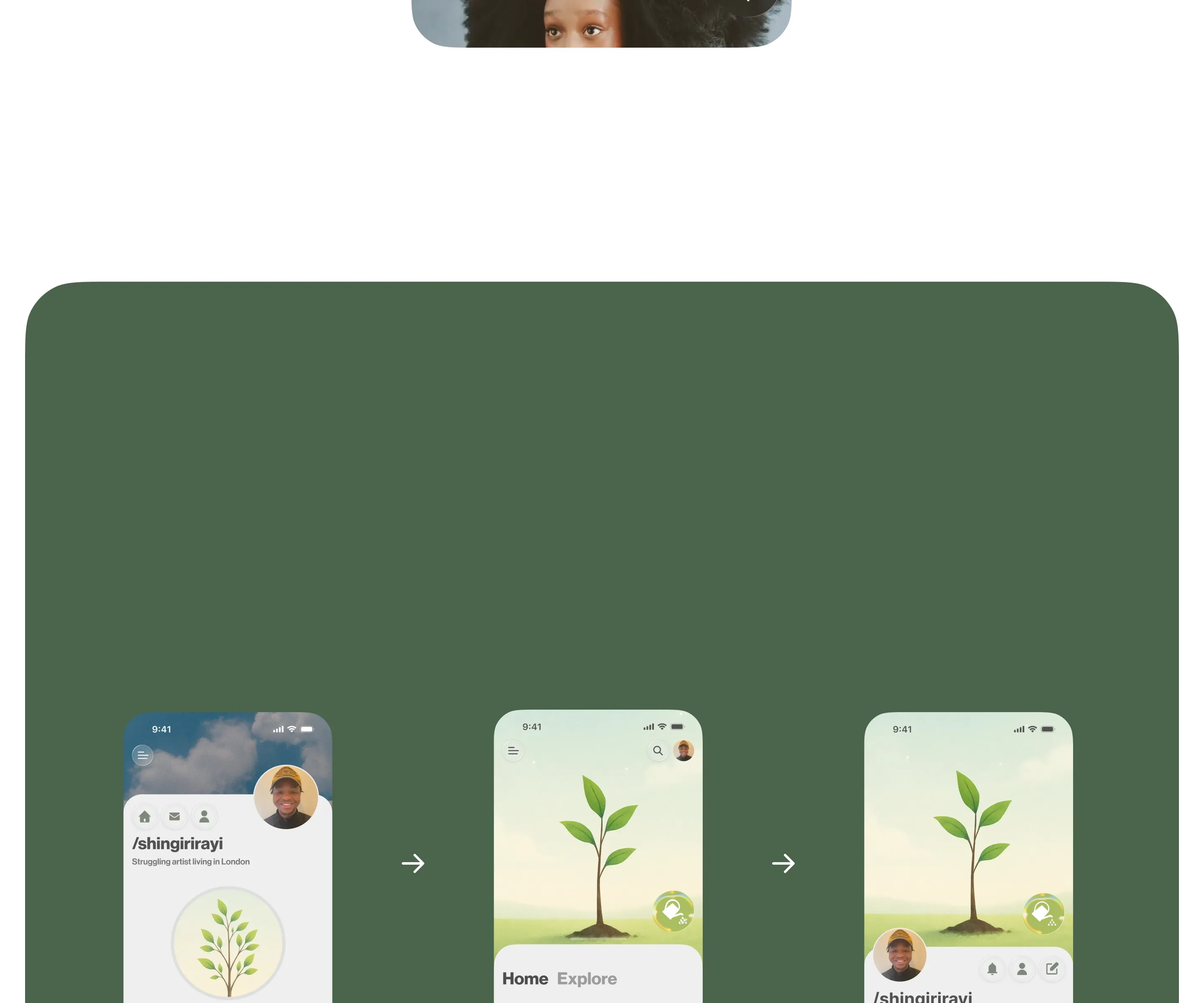
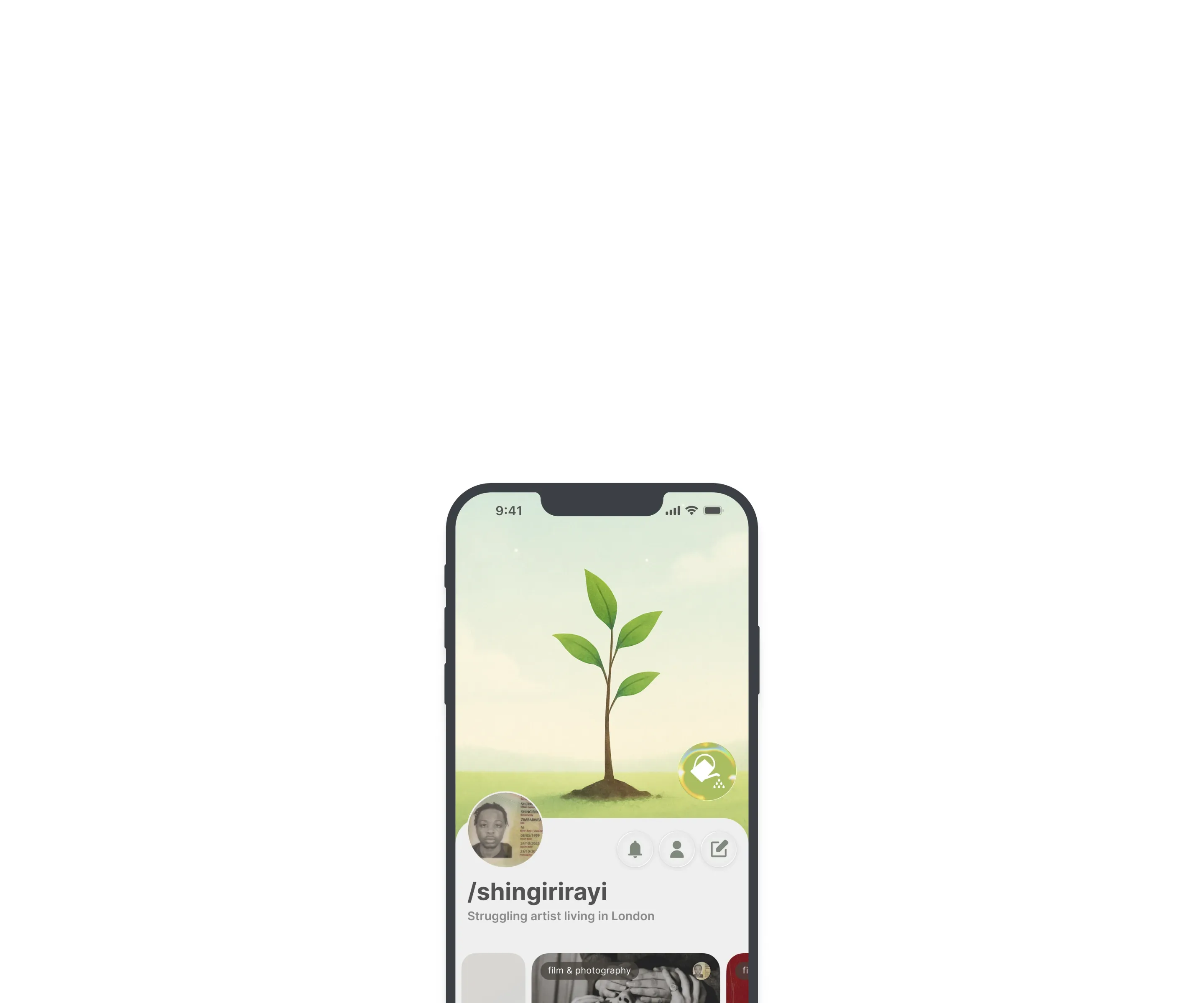
Where the tree lived was key to its purpose.
I tested three placements to make the Tree a clear, inviting expression of personal growth without interrupting discovery.
INITIAL
Within Profile
Personal, but it pushed your personal content further down.
TESTED
On Home
Prominent, but reflection competed with discovery.
CHOSEN
As Profile Cover
Made growth part of identity while keeping content accessible.
These principles moved Agora in the right direction.
However, the implementation still left the core behaviour too familiar.
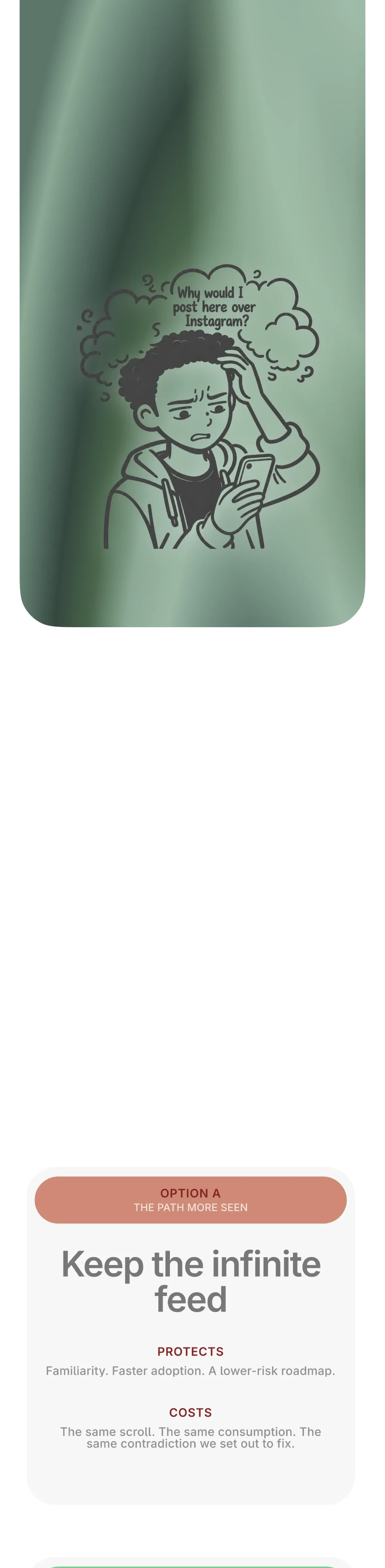
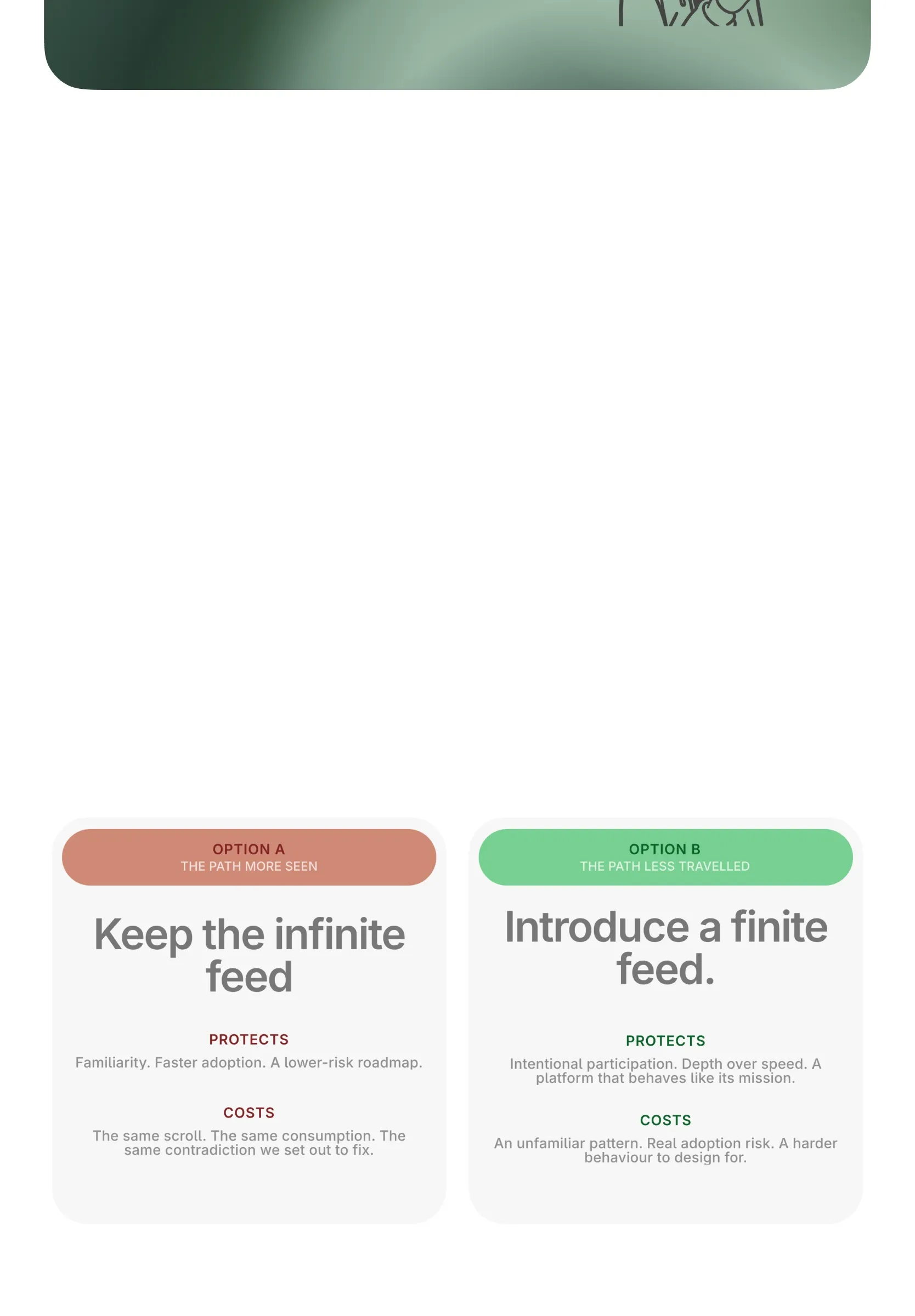
Usability testing with five participants aged 21 to 26 exposed contradictions.
A calmer Instagram was not enough. Agora needed to be a new model for creative growth.
It became clear that the feed was not just where content appeared.
It was the behaviour engine of the product. Changing it became the highest-leverage decision.
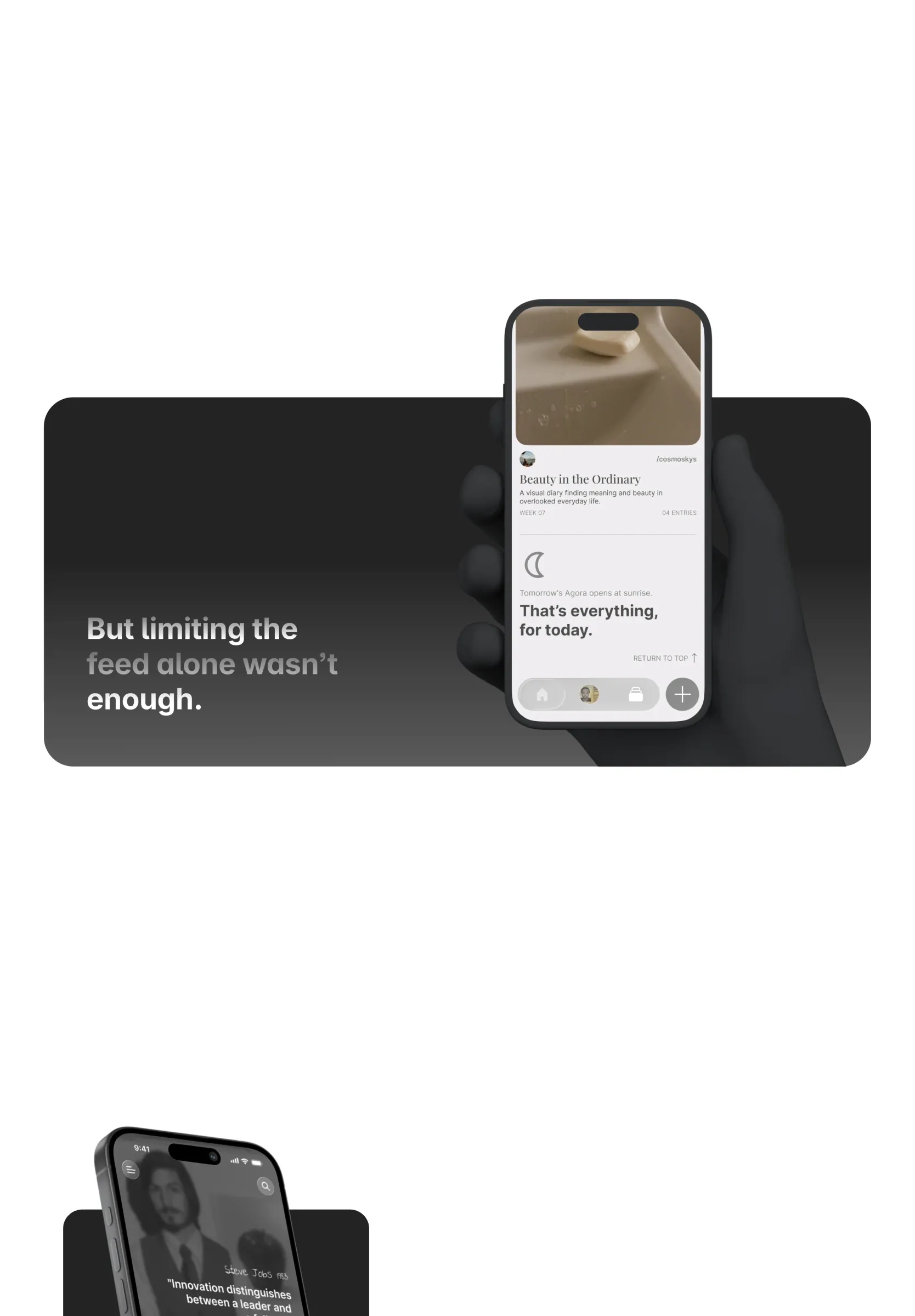
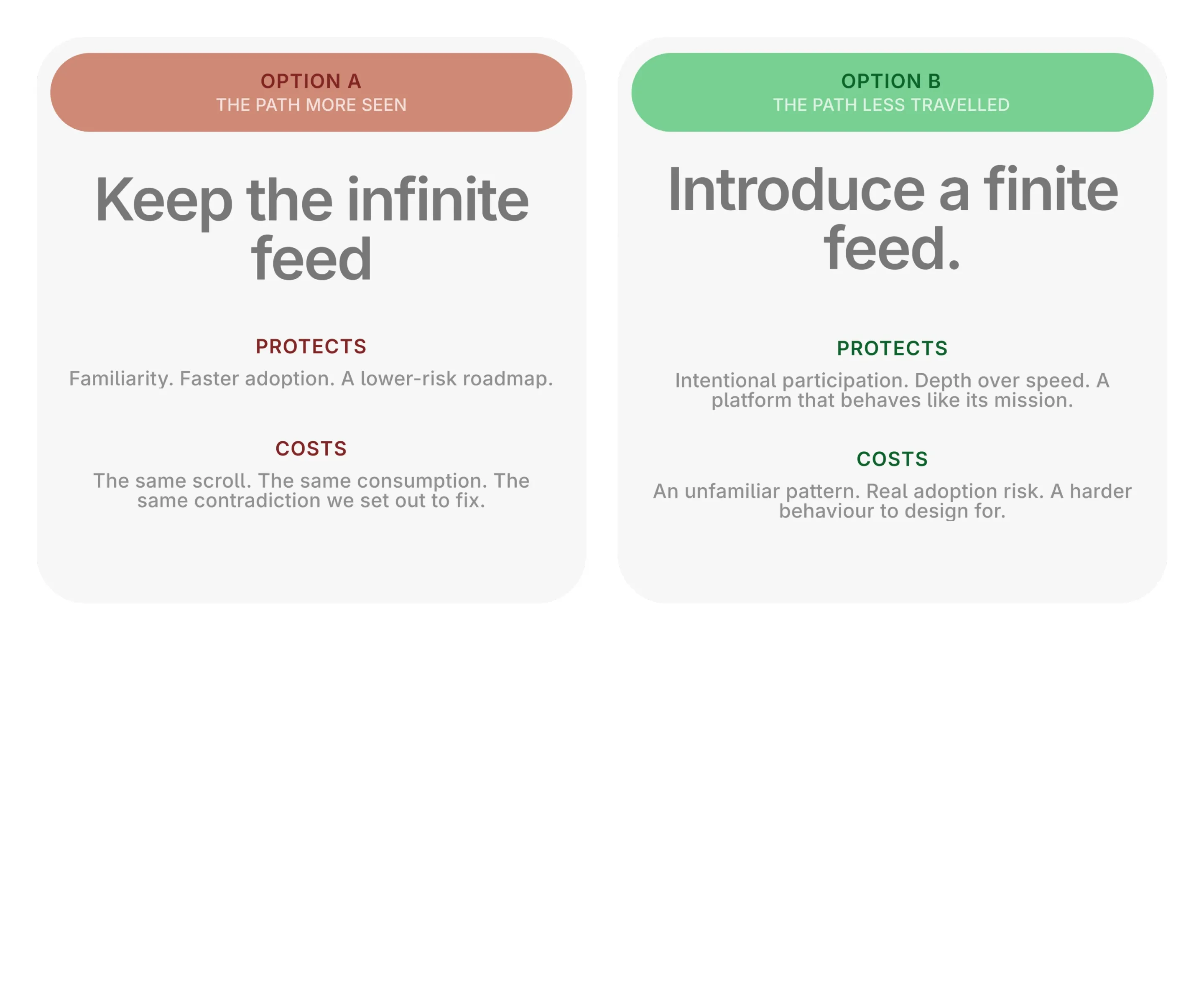
If the feed stayed infinite, Agora would keep reinforcing the same behaviours it set out to change.
So the next decision became clear —
I chose the path less travelled.
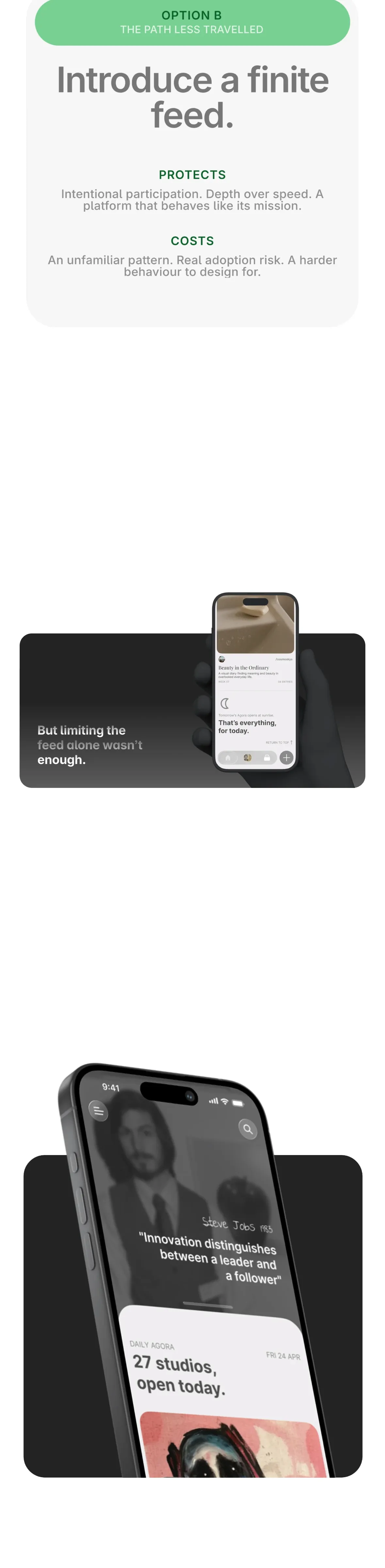
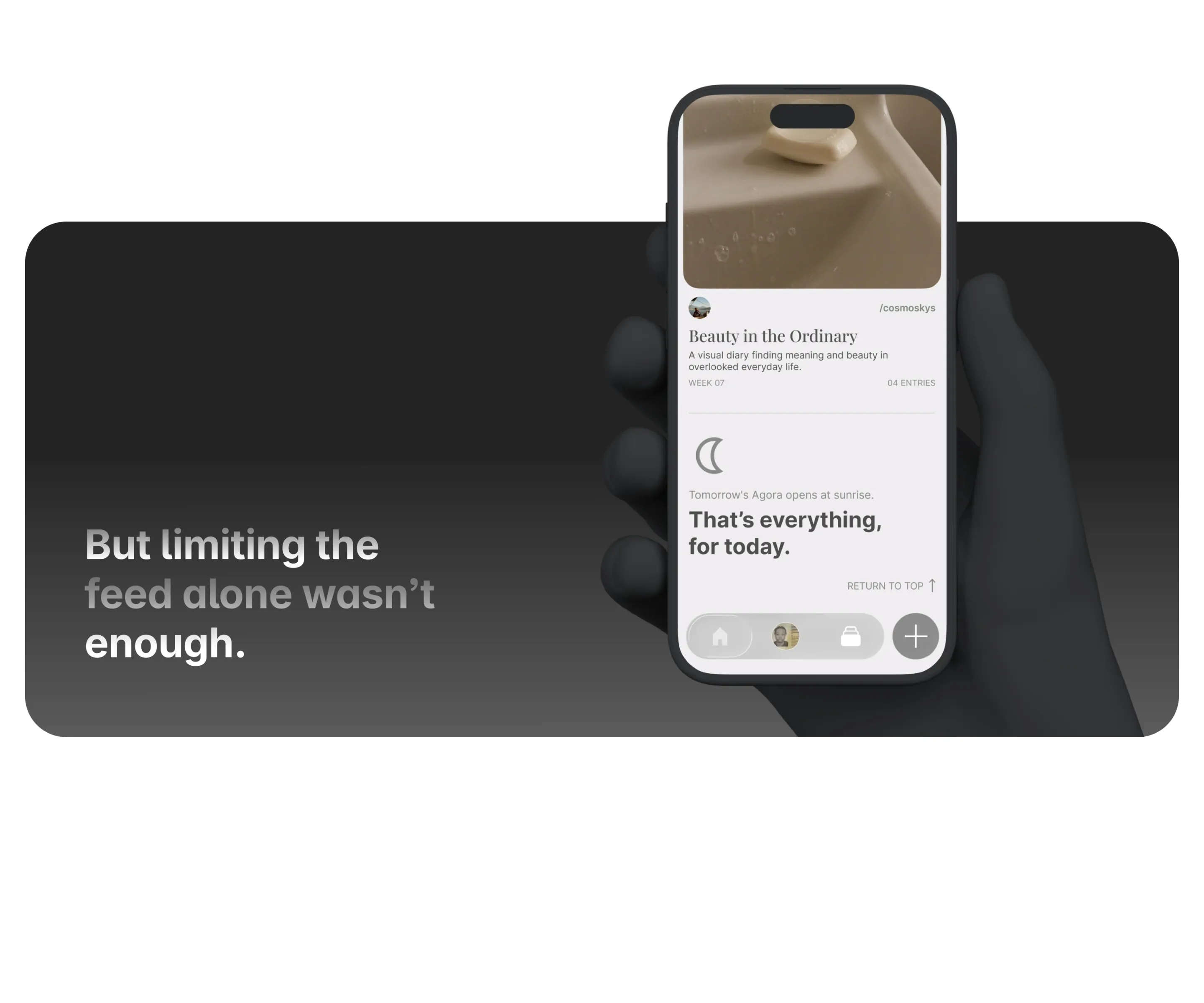
A finite feed aligned the product’s behaviour with Agora’s mission.
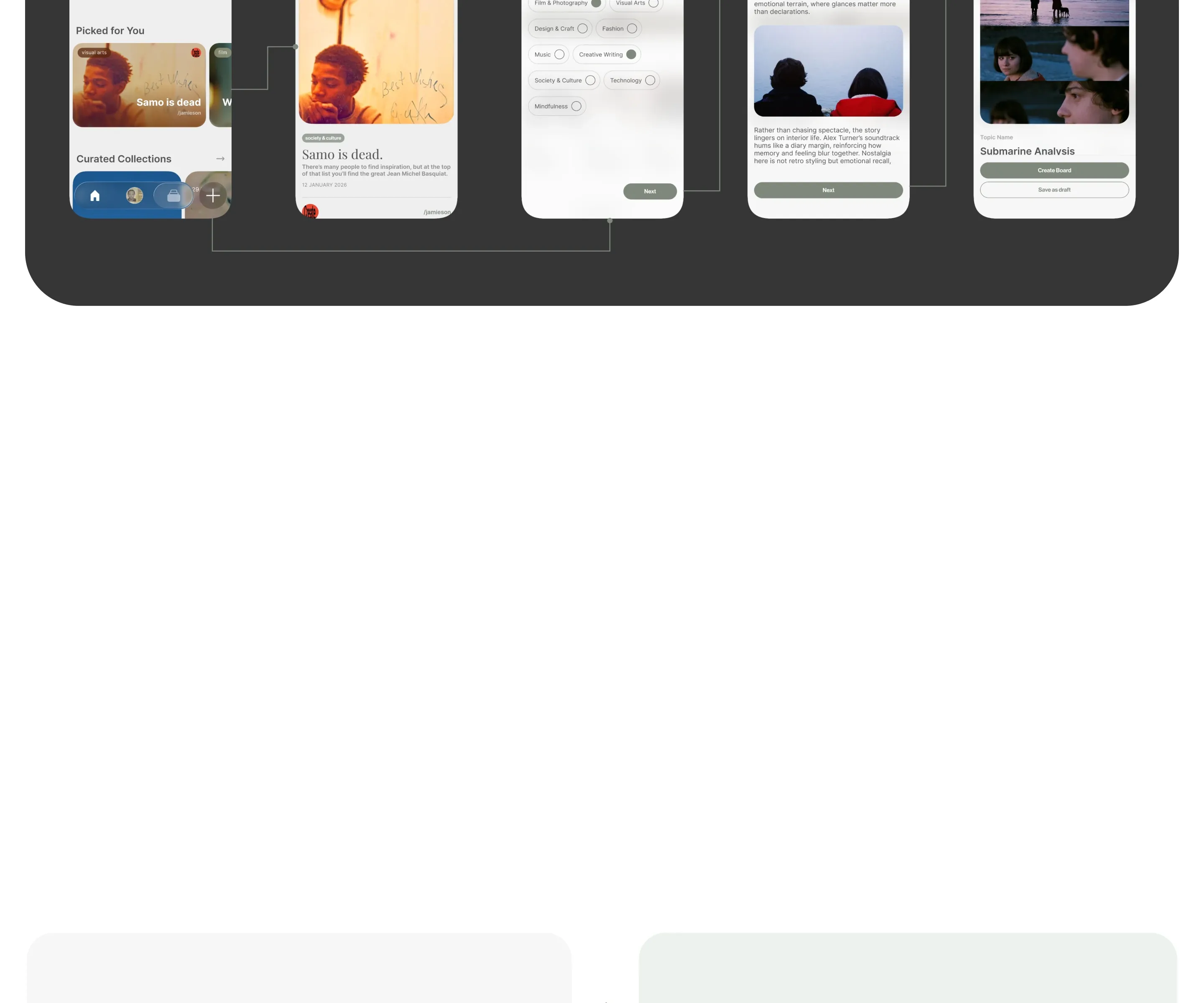
If the feed had an ending, users needed somewhere deeper to go.
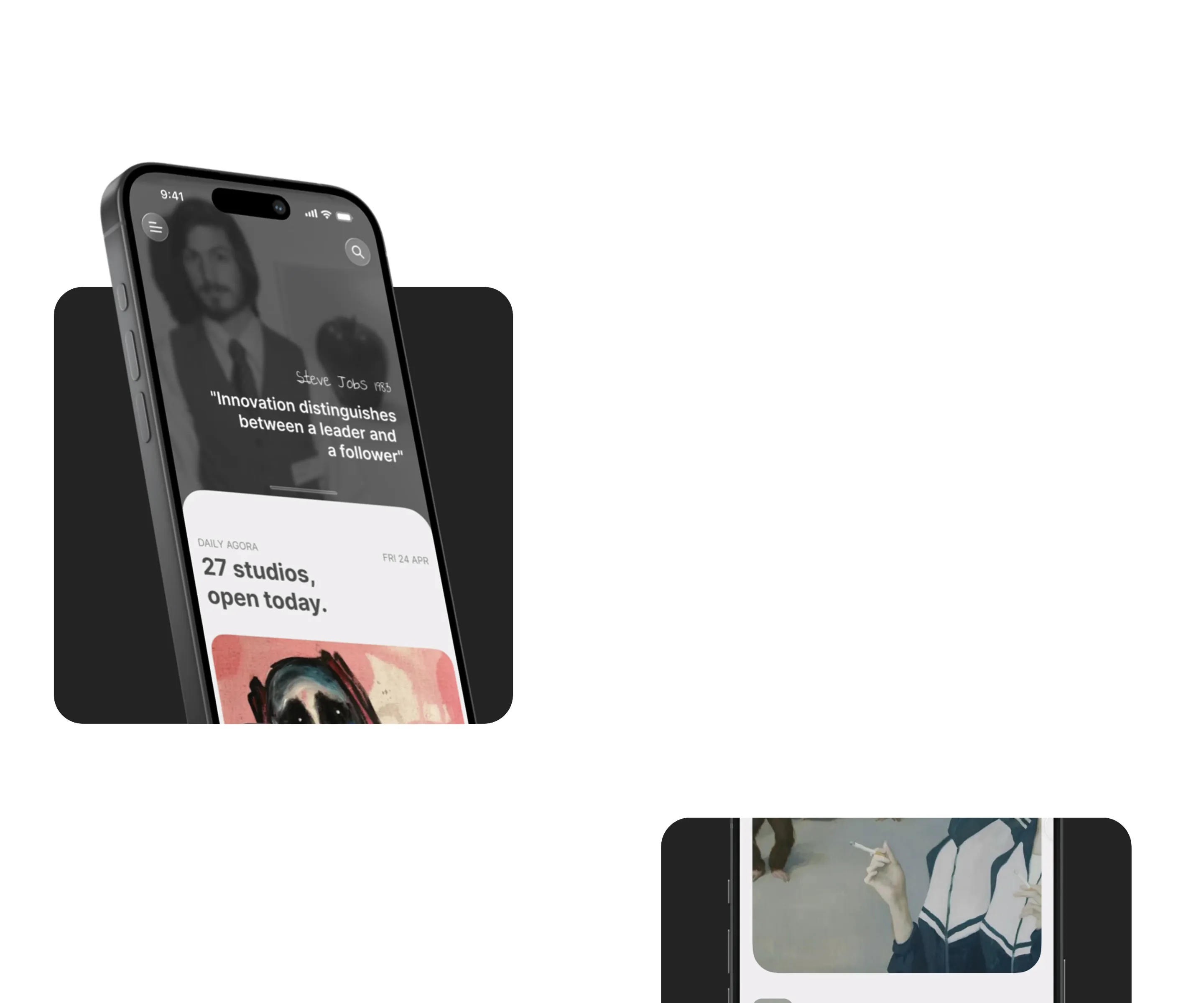
So I introduced Studios.
Post to Studios
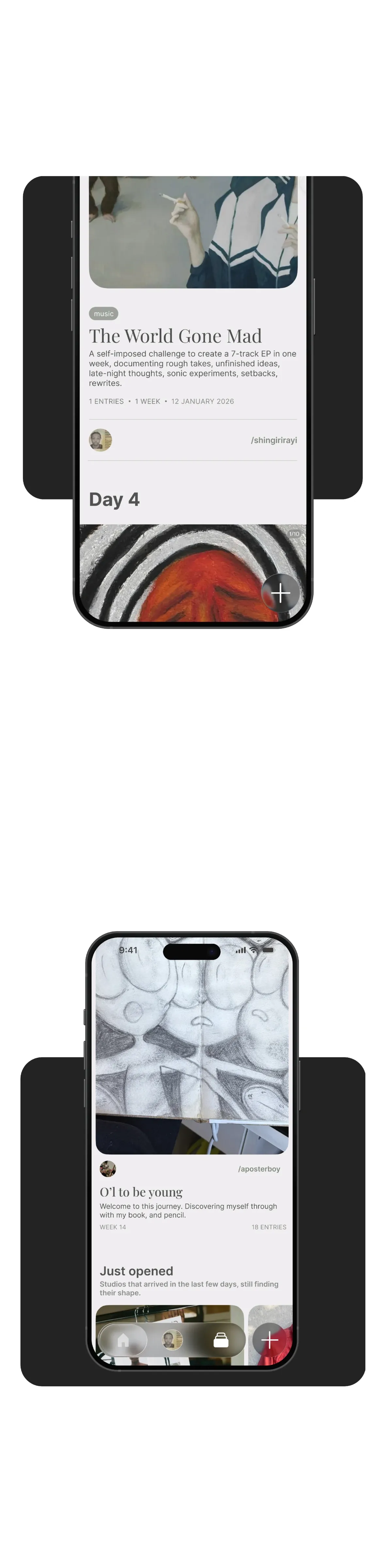
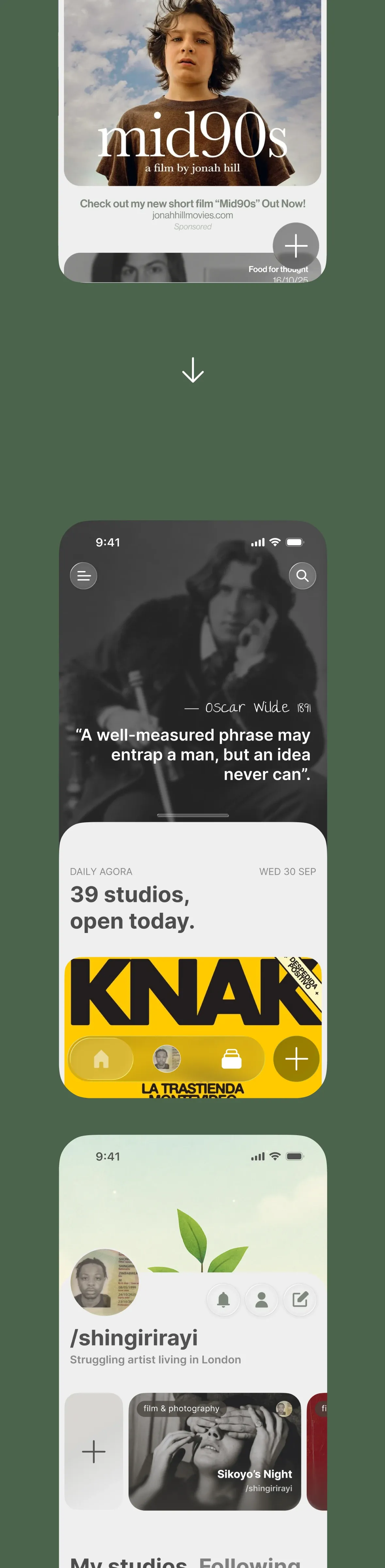
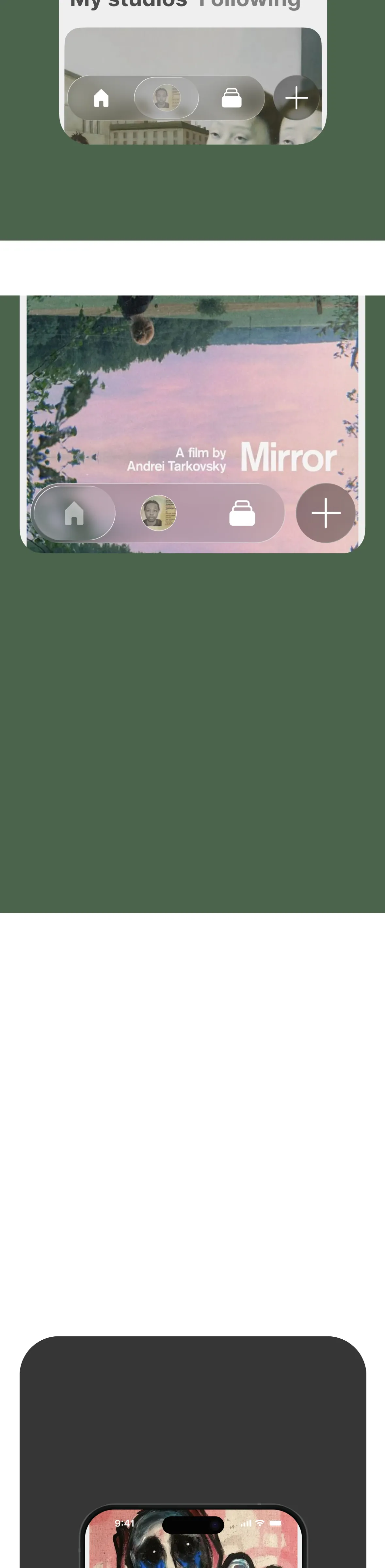
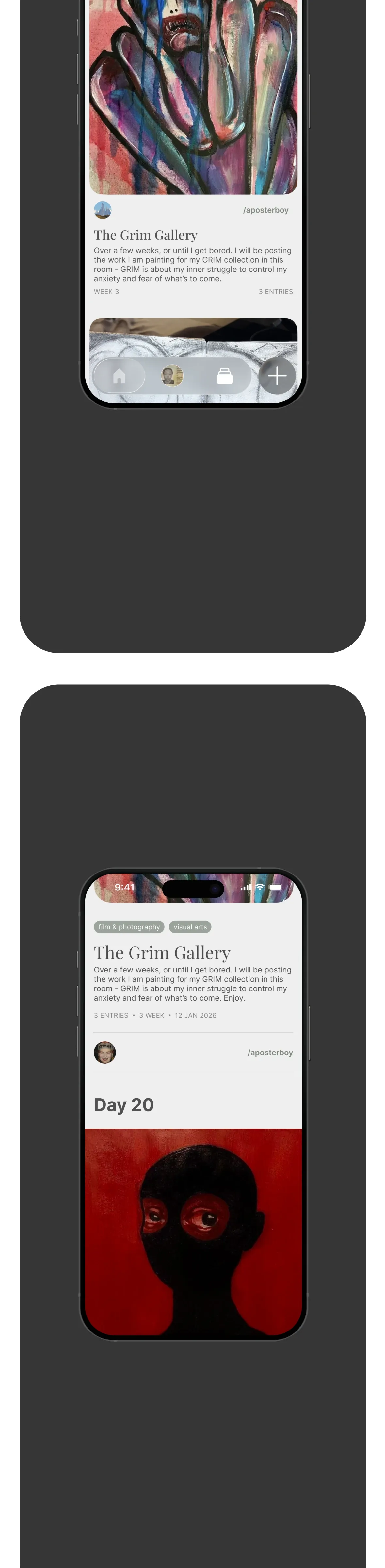
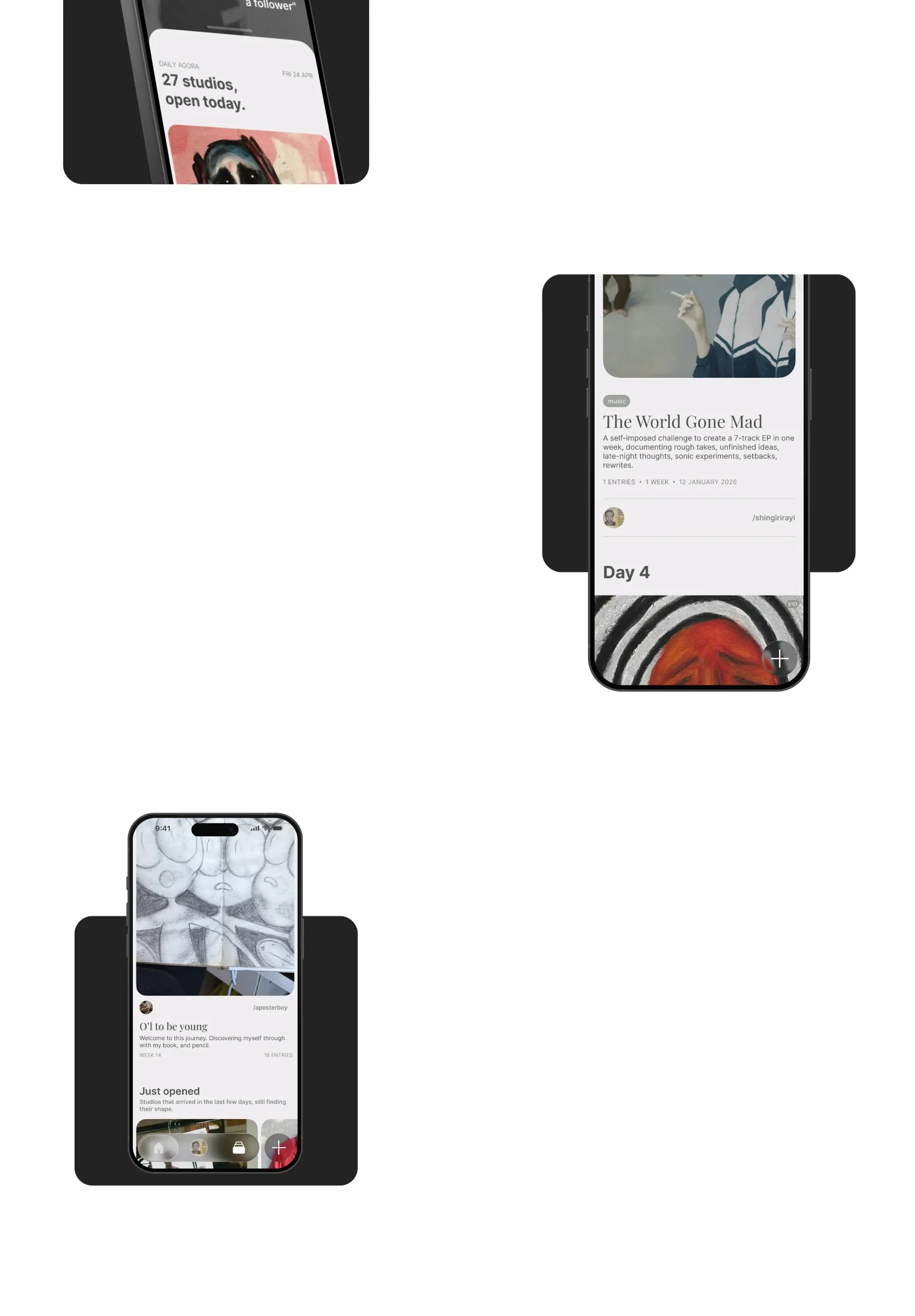
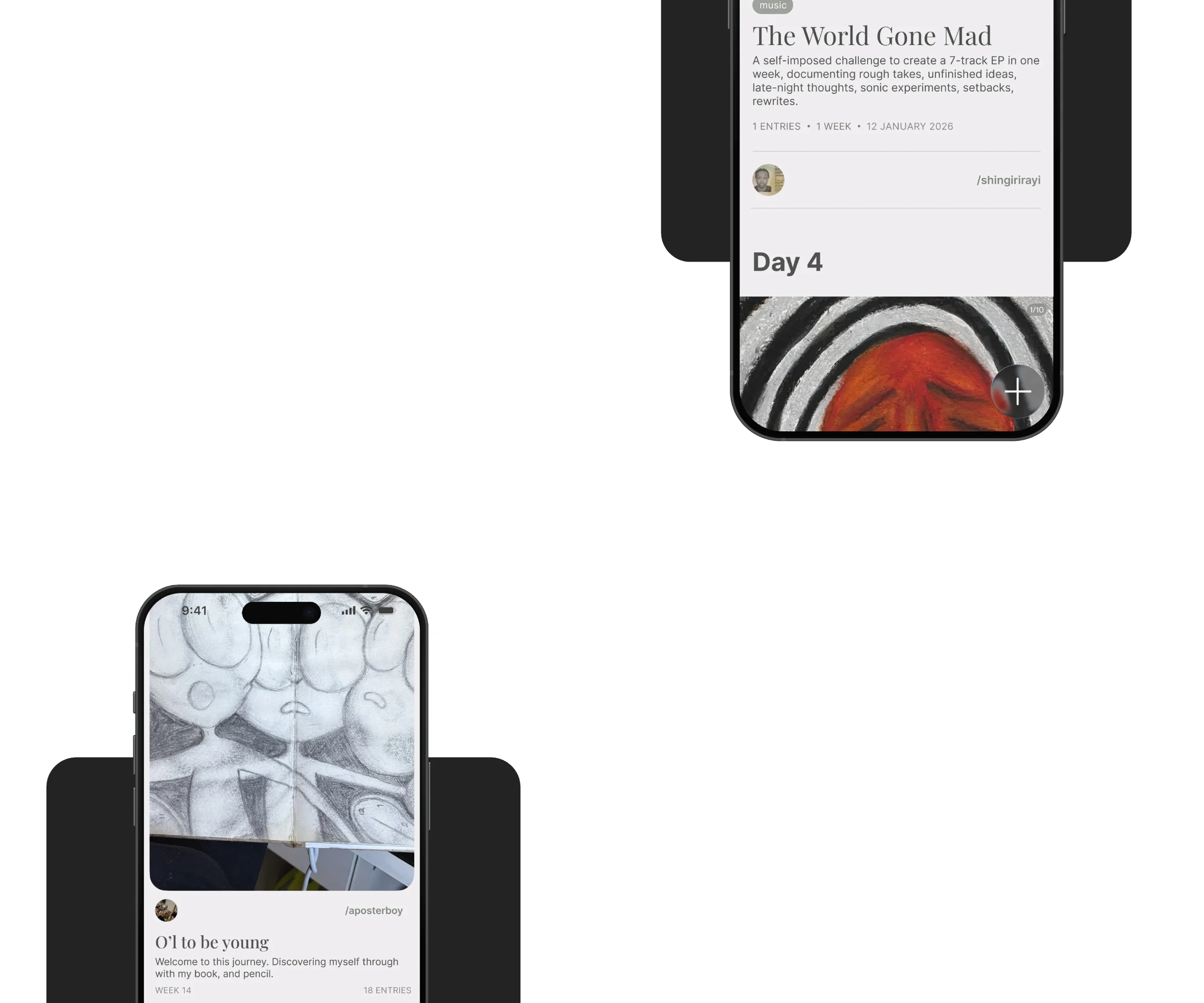
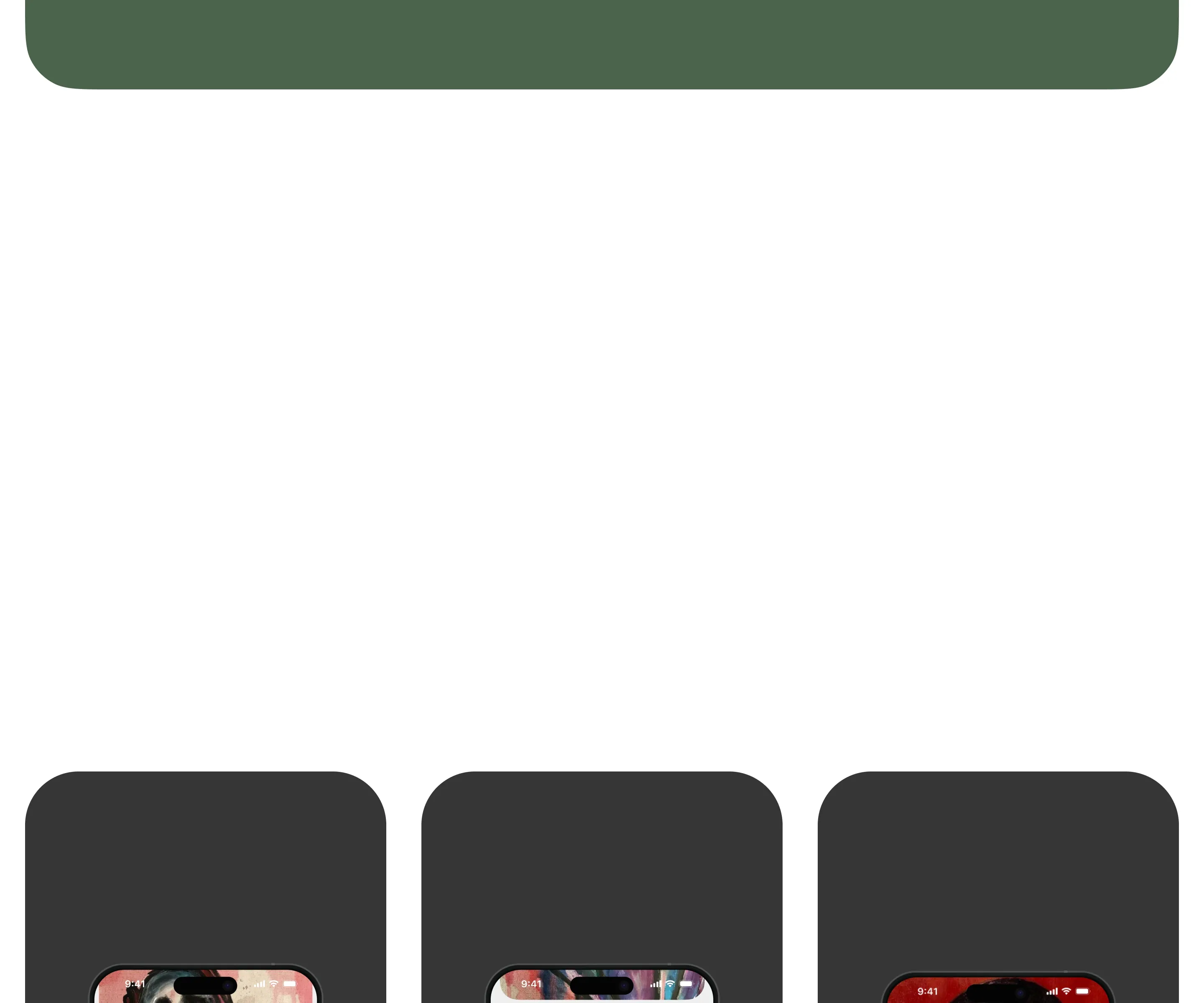
Instead of treating creative work as isolated posts, Studios gave each project a place to unfold through entries, updates, fragments, and progress over time.
From Scrolling to Returning
Studios gave people a reason to return to a creative journey, follow its development, and engage with progress instead of moving endlessly to the next post.
Process over Performance
Rough ideas, drafts, experiments, and reflections could sit together as part of a larger journey, reducing the pressure for every post to feel finished.
Studios shifted Agora from a feed of isolated posts to evolving spaces for creative progress.
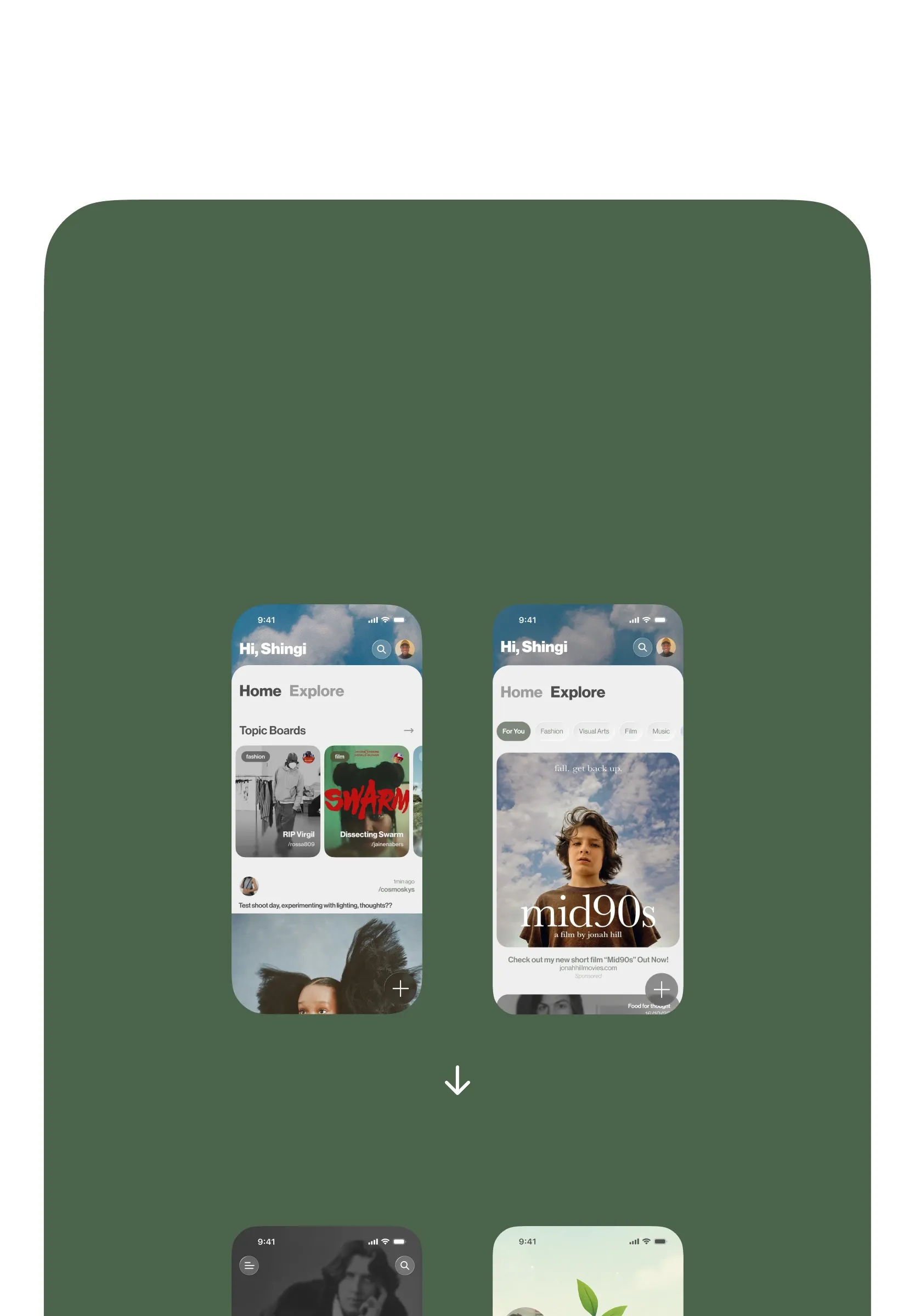
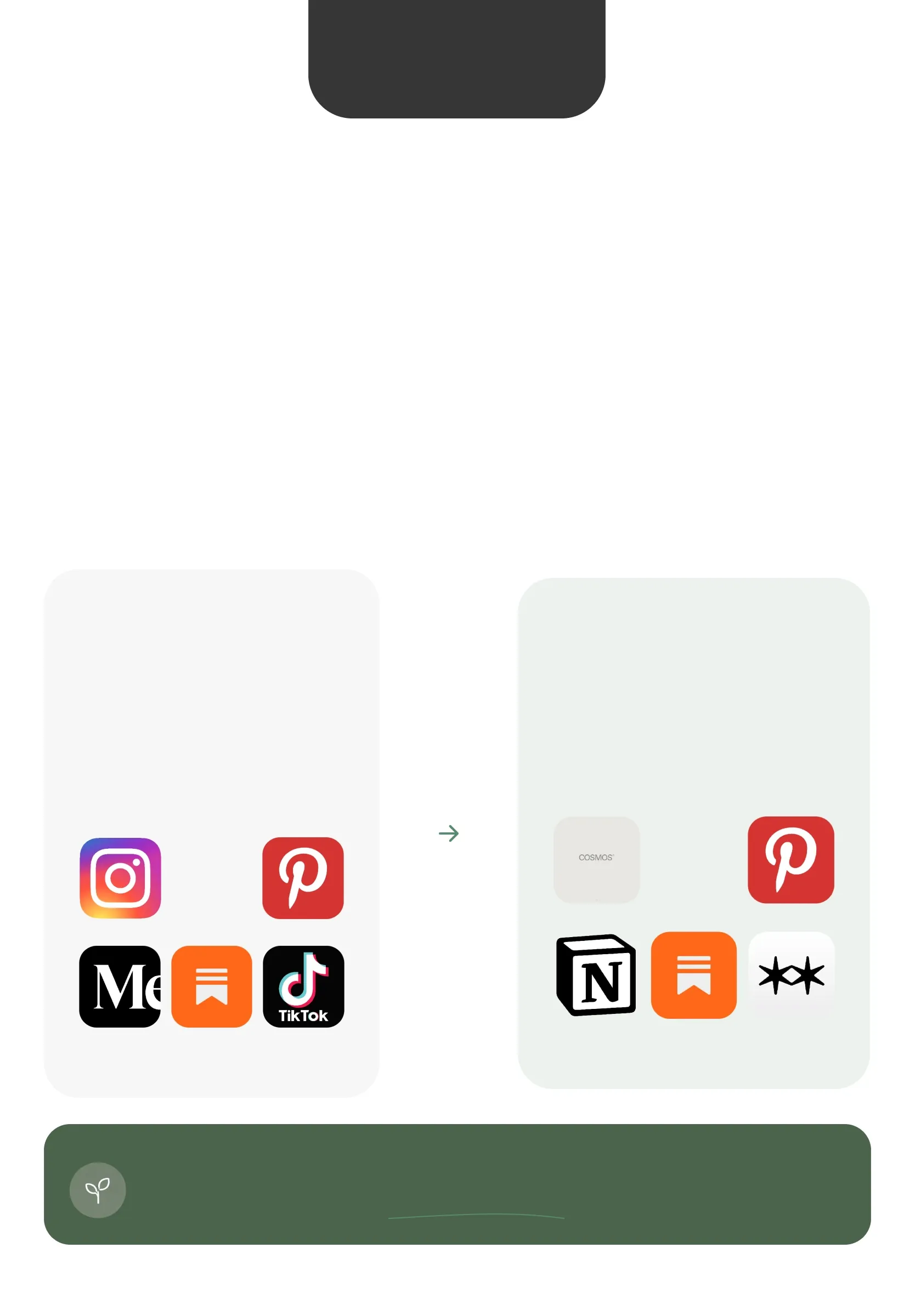
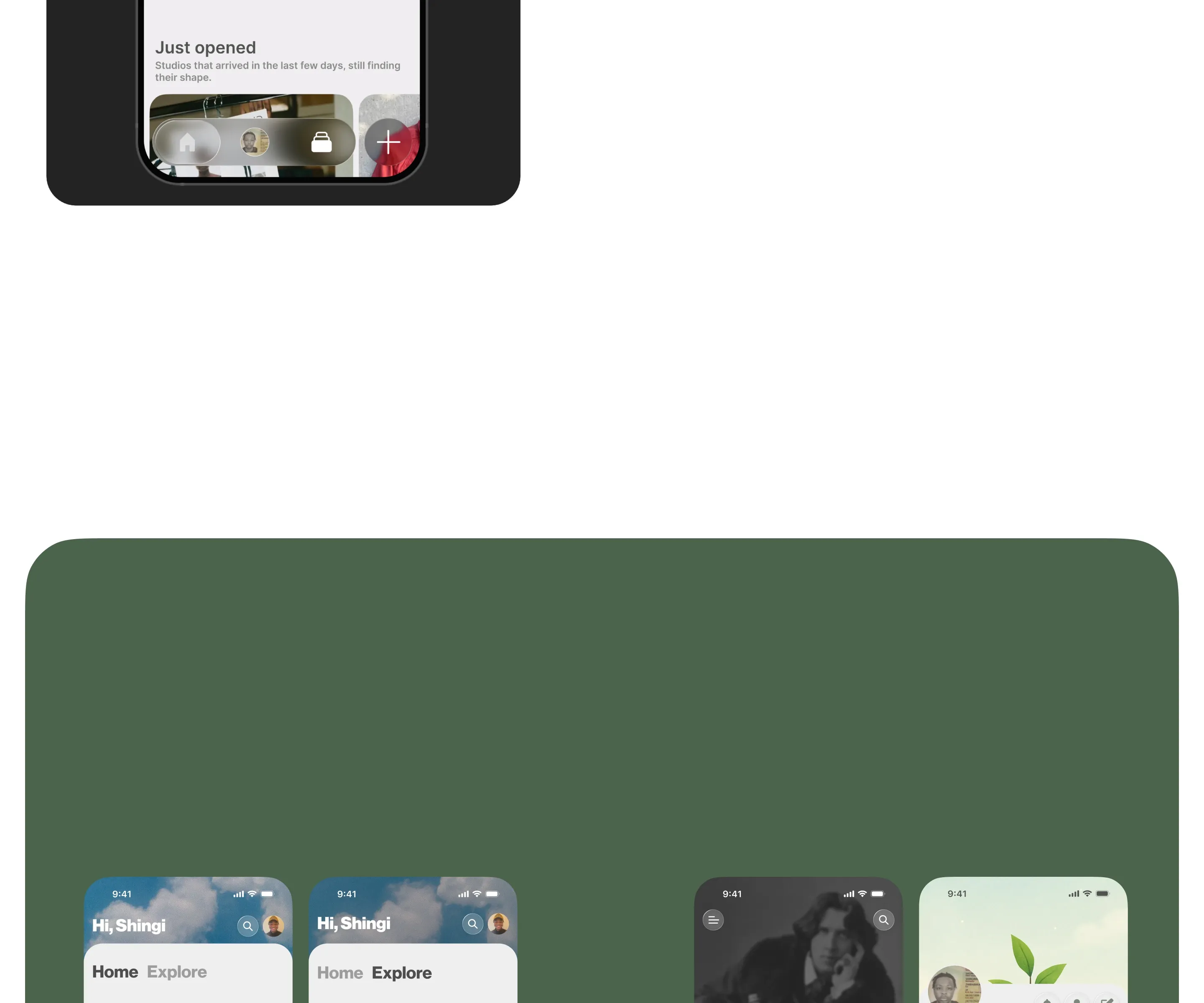
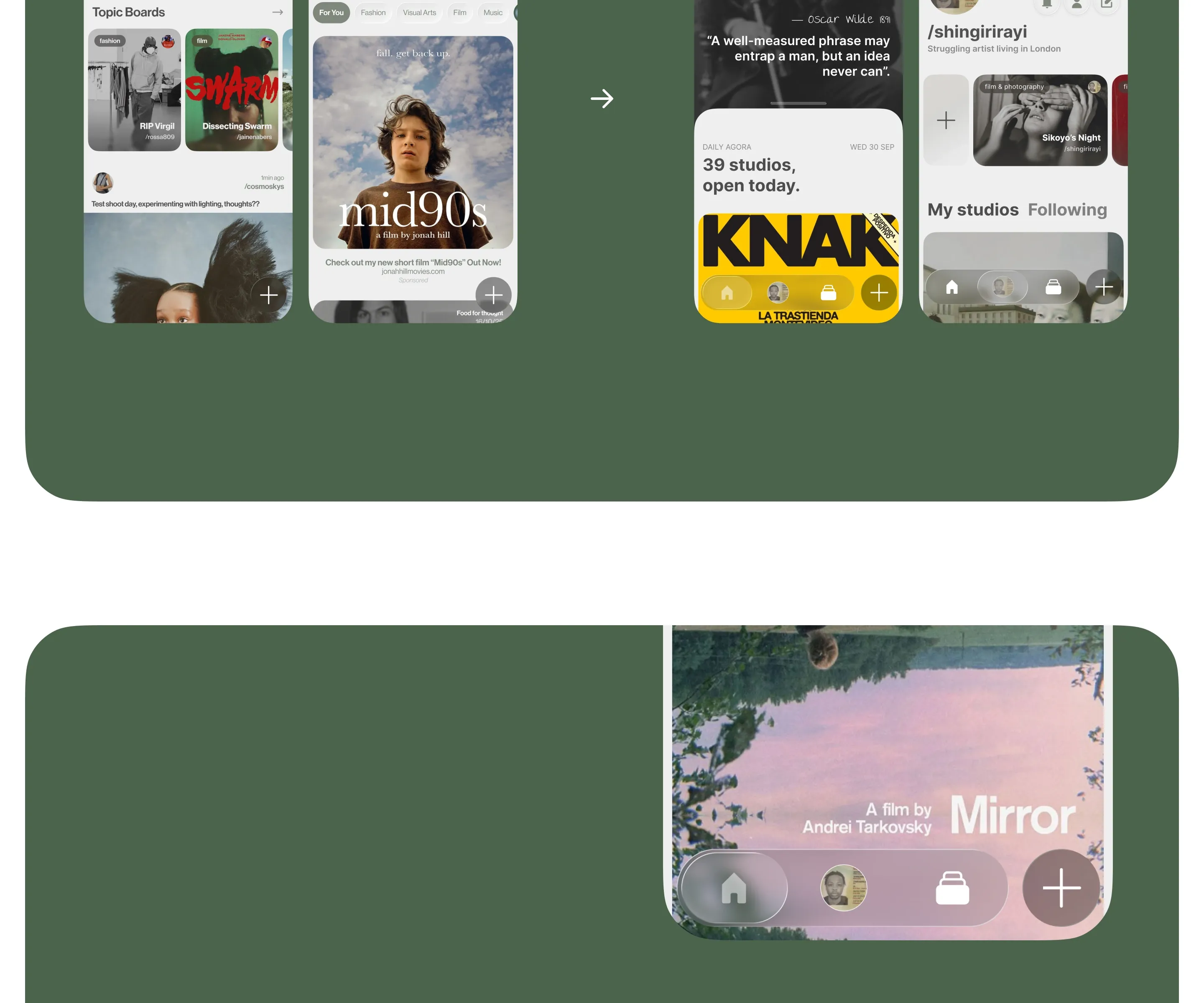
Home absorbed the role of Explore.
Its finite daily mix balanced familiar Studios with new discoveries.
Profile became the personal hub for created and followed Studios.
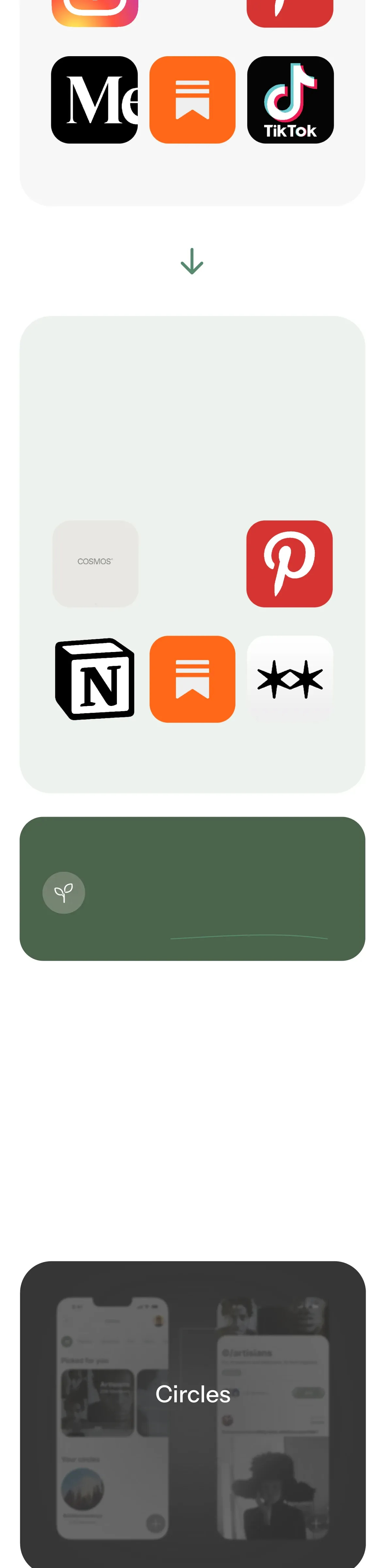
BEFORE
Two discovery destinations
AFTER
Two surfaces with distinct jobs
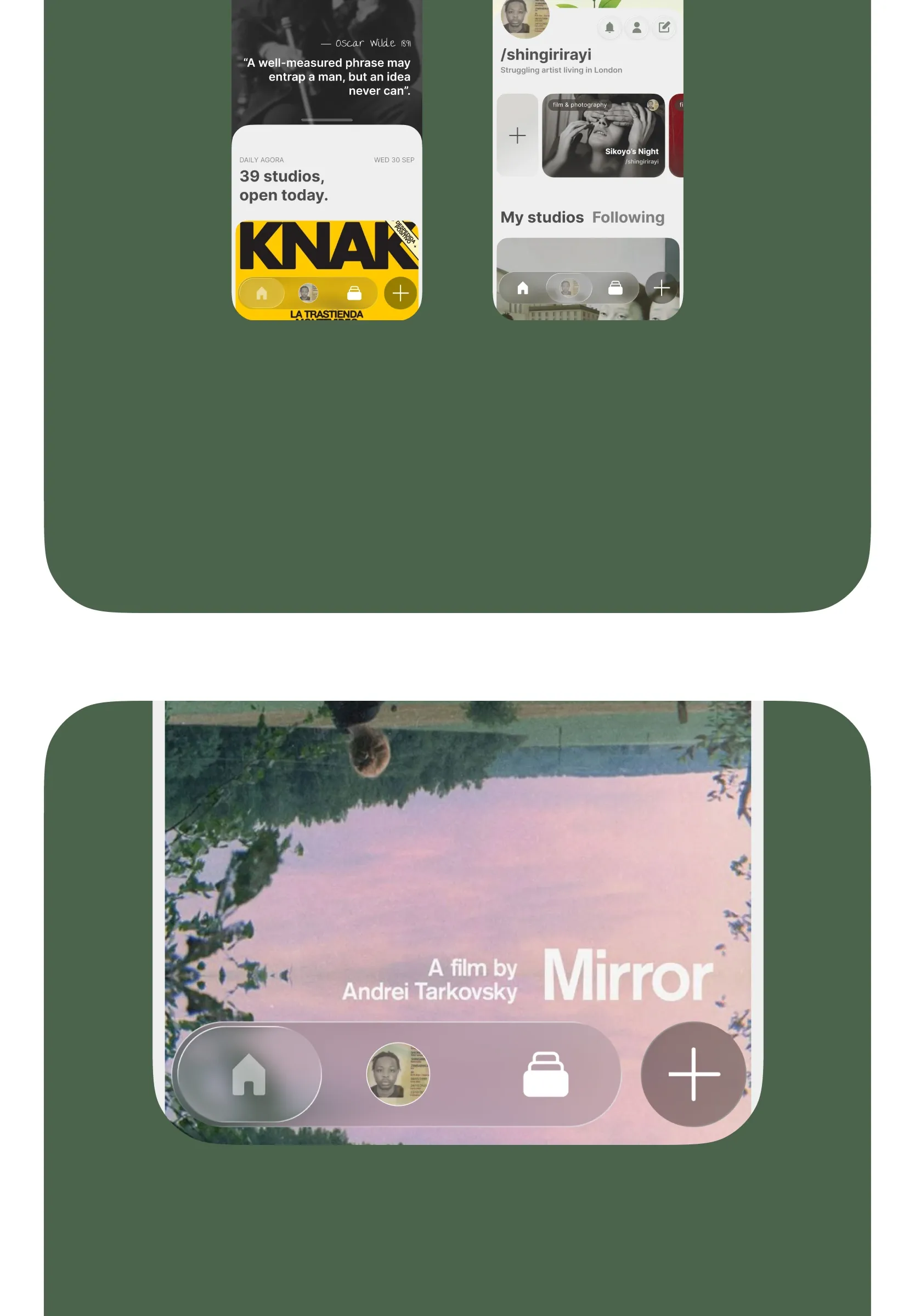
Removing the nav bar made sense for Agora’s earlier guided flow.
However, finite discovery and Studios already asked people to learn new behaviours.
Keeping navigation absent added unnecessary friction, so I restored it.
Pressure testing the new model
A finite feed challenged the behaviours users already understood: endless content, constant novelty, and easy return.
The goal was not to remove familiar return behaviour, but to redesign what people returned for.
Less content could feel like less value.
RESPONSE
Less volume, more depth
Each Studio held project context, multiple entries and ongoing progress, giving fewer discoveries more depth.
Slower discovery could reduce motivation.
RESPONSE
From novelty to progress
New entries showed how followed Studios had developed, giving users a reason to return.
A new model could increase friction.
RESPONSE
Familiar Patterns, new behaviour
Keeping the feed familiar and restoring navigation made Studios easier to learn without bringing back endless scrolling.
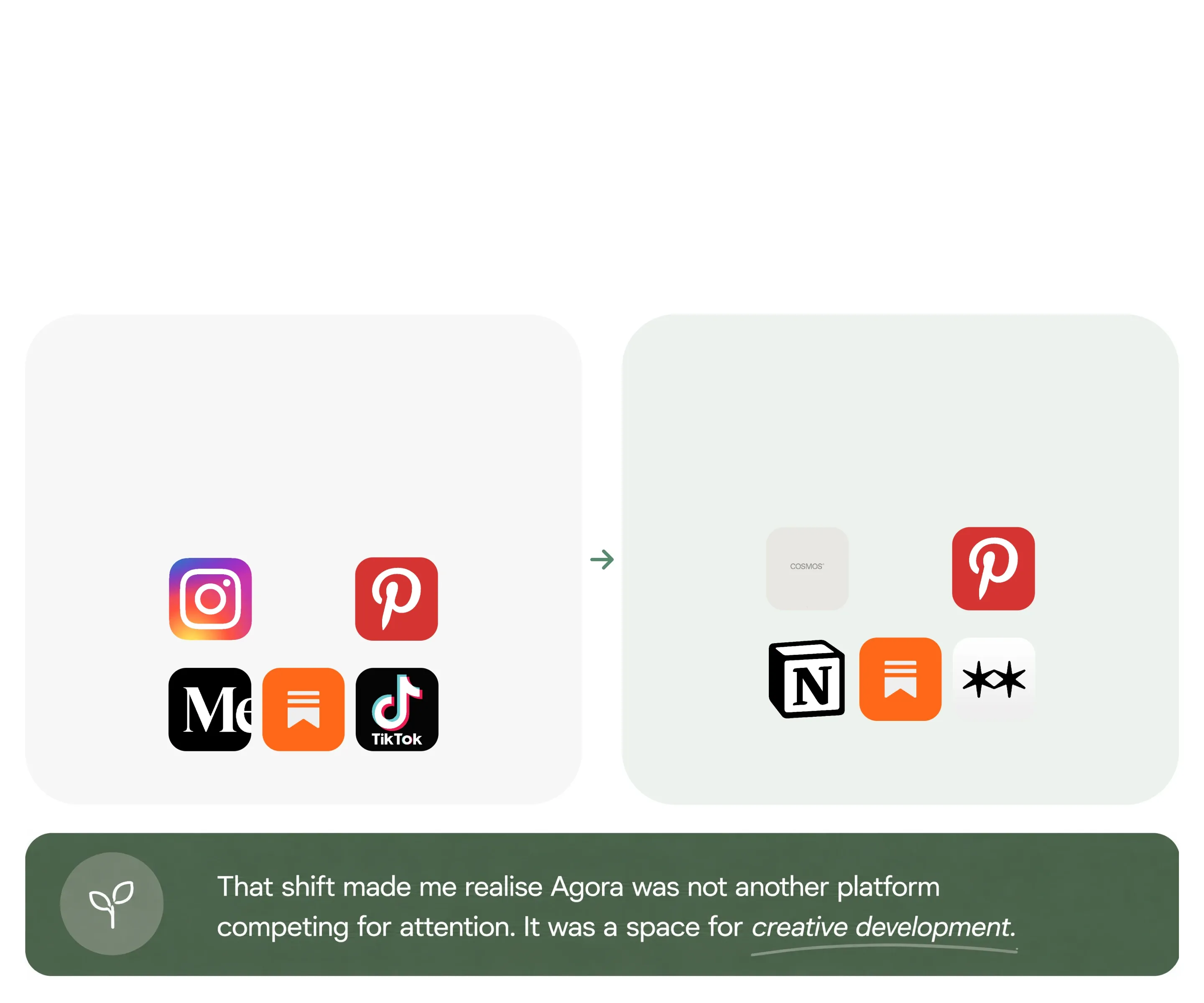
Introducing Studios and a finite feed shifted the competitive lens.
Agora was not designed to replace mainstream social platforms. It occupied a different space in a creator’s ecosystem: one centred on progress, reflection and idea development.
Original Lens
Value is measured through visibility and audience response.
Reframed Lens
Value is measured through progress, reflection, and return.
That shift made me realise Agora was not another platform competing for attention. It was a space for creative development.
From Values to Structure: Agora’s Growth System
Once Studios became the stronger space for creative progress and community, Circles was no longer essential for the MVP.
Removed from MVP
The final system centred on three connected spaces:
Studios for creative growth, Gratitude Tree for internal growth, and Topic Boards for intellectual growth.
Studios
The centre of Agora. Studios turn creative work from isolated posts into evolving spaces where projects unfold over time.
Gratitude Tree
A private space for reflection that helps users build a quiet rhythm of gratitude, memory and personal progress without turning it into performance.
Topic Boards
A space for slower intellectual engagement, where users can explore ideas, essays, and deeper discussions outside the feed.
The Shift Was Behavioural
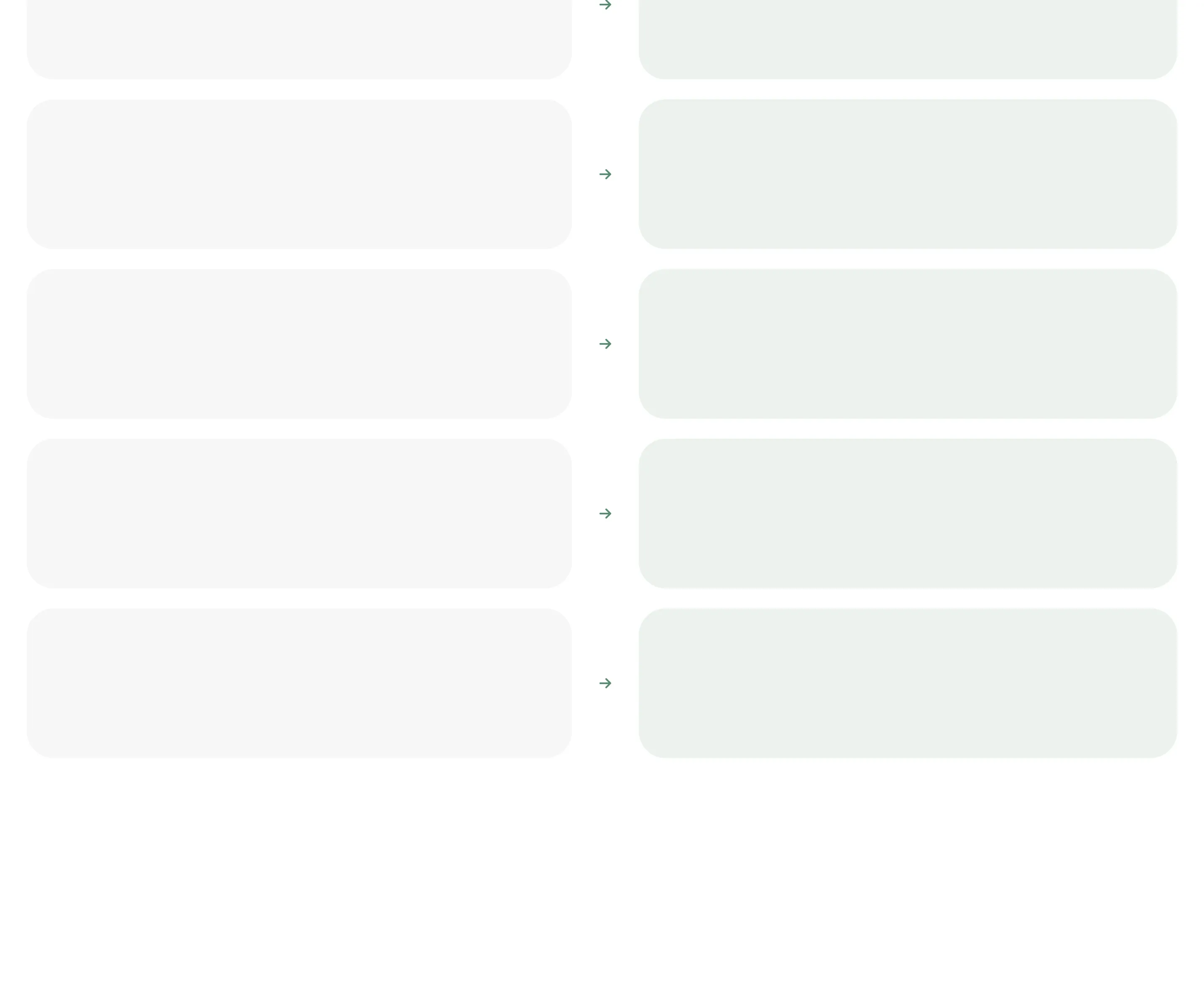
The clearest way to understand the shift is not by comparing features, but by comparing the behaviours Agora encouraged before and after.
01
BEFORE
Infinite Feed
Endless content shaped the experience.
AFTER
Finite Daily Discovery
The feed became limited instead of endless.
02
BEFORE
No Structure for Work in Progress
The feed offered no clear affordance for unfinished work in progress.
AFTER
Evolving Studios
Creative work unfolded through entries over time.
03
BEFORE
Scrolling Still Felt Passive
The feed made it easy to consume without intention.
AFTER
Intentional Return
Users returned to follow progress, not chase endless novelty.
04
BEFORE
Growth Still Sat Around The Feed
Growth spaces existed, but the feed still pulled users back into familiar social behaviours.
AFTER
Growth Built Into the System
Creative, internal, and intellectual growth became part of the product structure.
05
BEFORE
Validation Still Lived Underneath
Likes were removed, but the feed still left users searching for approval.
AFTER
Creative Progress
Process and development became stronger signals of value.
What would success look like?
Success meant patterns of return tied to progress and reflection—not endless engagement.
Creative Growth
Studio Continuation Rate
Whether users keep developing creative projects over time.
Return to followed Studios
Whether users come back to creative journeys as they develop.
System Health
Return after feed completion
Whether users come back after reaching the end of the feed.
Studio creation from feed
Whether discovery moves users beyond the feed into deeper spaces.
Intellectual Growth
Topic Board read-through rate
Whether users engage with deeper ideas rather than skimming.
Return to discussions
Whether Topic Boards create ongoing intellectual engagement.
Personal Growth
Reflection frequency
Whether users return to private reflection regularly.
Reflection consistency
Whether users build a consistent rhythm of gratitude.
So what did I learn? —
This project taught me that behavioural change requires more than removing harmful patterns. It requires designing an ecosystem that affords new ones.
A finite feed could reduce passive scrolling, but without Studios it would only remove the old behaviour, not replace it. Studios gave users a deeper reason to return.
A decision can be right at one stage and become unnecessary as the system evolves.
Removing navigation initially supported more intentional movement, but once the finite feed and Studios carried that behaviour, its absence became unnecessary friction. I learned to keep testing earlier decisions against the product as it evolves—not defend them simply because they once made sense.
Final Prototype
(Click to view)
Next Project




Creative Growth Platform
Agora
The algorithm doesn’t care that you’re figuring something out. It only rewards you when you’ve already got the answer.
Agora is a creative growth app where people document ideas, develop creative projects, and reflect through evolving spaces called Studios, Topic Boards, and the Gratitude Tree.
The product challenged where value is placed across the creative journey.
INITIAL DESIGN
Support Growth Before Outcome
Agora afforded growth through three modes: dialogue, reflection, and perspective.
Gratitude Tree = Internal Growth.
Topic Boards = Intellectual Growth.
Circles = Community Growth.
INITIAL DESIGN
Work Before Validation
Likes were removed entirely, while other performance signals were moved deeper inside posts.
Feed
Inside Post
INITIAL DESIGN
Move With Intention
With no nav bar, Agora used guided screen-to-screen flow to reduce passive switching and slow the experience.
Where the tree lived was key to its purpose.
I tested three placements to make the Tree a clear, inviting expression of personal growth without interrupting discovery.
INITIAL
TESTED
CHOSEN
Within Profile
On Home
As Profile Cover
Personal, but it pushed your personal content further down.
Prominent, but reflection competed with discovery.
Made growth part of identity while keeping content accessible.
These principles moved Agora in the right direction.
However, the implementation still left the core behaviour too familiar.
Usability testing with five participants aged 21 to 26 exposed contradictions.
A calmer Instagram was not enough. Agora needed to be a new model for creative growth.
It became clear that the feed was not just where content appeared.
It was the behaviour engine of the product. Changing it became the highest-leverage decision.
If the feed stayed infinite, Agora would keep reinforcing the same behaviours it set out to change.
So the next decision became clear —
I chose the path less travelled.
A finite feed aligned the product’s behaviour with Agora’s mission.
If the feed had an ending, users needed somewhere deeper to go.
So I introduced Studios
Post to Studios
Instead of treating creative work as isolated posts, Studios gave each project a place to unfold through entries, updates, fragments, and progress over time.
From Scrolling to Returning
Studios gave people a reason to return to a creative journey, follow its development, and engage with progress instead of moving endlessly to the next post.
Process over Performance
Rough ideas, drafts, experiments, and reflections could sit together as part of a larger journey, reducing the pressure for every post to feel finished.
Studios shifted Agora from a feed of isolated posts to evolving spaces for creative progress.
Home absorbed the role of Explore.
Profile became the personal hub for created and followed Studios.
BEFORE
Two discovery destinations
AFTER
Two surfaces with distinct jobs
The finite daily mix balanced familiar Studios with new discoveries.
Removing the nav bar made sense for Agora’s earlier guided flow.
However, keeping navigation absent added unnecessary friction, so I restored it.
Pressure testing the new model
A finite feed challenged the behaviours users already understood: endless content, constant novelty, and easy return.
The goal was not to remove familiar return behaviour, but to redesign what people returned for.
Less content could feel like less value.
A new model could increase friction.
RESPONSE
RESPONSE
Familiar Patterns, new behaviour
Less volume, more depth
Keeping the feed familiar and restoring navigation made Studios easier to learn without bringing back endless scrolling.
Each Studio held project context, multiple entries and ongoing progress, giving fewer discoveries more depth.
Slower discovery could reduce motivation.
RESPONSE
From novelty to progress
New entries showed how followed Studios had developed, giving users a reason to return.
Introducing Studios and a finite feed shifted the competitive lens.
Agora was not designed to replace mainstream social platforms. It occupied a different space in a creator’s ecosystem: one centred on progress, reflection and idea development.
Original Lens
Reframed Lens
Value is measured through visibility and audience response.
Value is measured through progress, reflection, and return.
That shift made me realise Agora was not another platform competing for attention. It was a space for creative development.
From Values to Structure: Agora’s Growth System
Once Studios became the stronger space for creative progress and community, Circles was no longer essential for the MVP.
Removed from MVP
The final system centred on three connected spaces:
CREATIVE GROWTH
Studios
The centre of Agora. Studios turn creative work from isolated posts into evolving spaces where projects unfold over time.
INTERNAL GROWTH
Gratitude Tree
A private space for reflection that helps users build a quiet rhythm of gratitude, memory and personal progress without turning it into performance.
INTELLECTUAL GROWTH
Topic Boards
A space for slower intellectual engagement, where users can explore ideas, essays, and deeper discussions outside the feed.
The Shift Was Behavioural
The clearest way to understand the shift is not by comparing features, but by comparing the behaviours Agora encouraged before and after.
BEFORE
AFTER
A feed-led product with growth spaces attached.
A growth-led system.
Infinite Feed
Finite Daily Discovery
Endless content shaped the experience.
The feed became limited instead of endless.
No Structure for Work in Progress
Evolving Studios
Creative work unfolded through entries over time.
The feed offered no clear affordance for unfinished work in progress.
Scrolling Still Felt Passive
Intentional Return
The feed made it easy to consume without intention.
Users returned to follow progress, not chase endless novelty.
Growth Still Sat Around The Feed
Growth Built Into the System
Growth spaces existed, but the feed still pulled users back into familiar social behaviours.
Creative, internal, and intellectual growth became part of the product structure.
Validation Still Lived Underneath
Creative Progress
Likes were removed, but the feed still left users searching for approval.
Process and development became stronger signals of value.
What would success look like?
Success meant patterns of return tied to progress and reflection—not endless engagement.
Creative Growth
Personal Growth
Studio Continuation Rate
Reflection frequency
Whether users keep developing creative projects over time.
Whether users return to private reflection regularly.
Return to followed Studios
Reflection consistency
Whether users come back to creative journeys as they develop.
Whether users build a consistent rhythm of gratitude.
Intellectual Growth
System Health
Topic Board read-through rate
Return after feed completion
Whether users engage with deeper ideas rather than skimming.
Whether users come back after reaching the end of the feed.
Return to discussions
Studio creation from feed
Whether Topic Boards create ongoing intellectual engagement.
Whether discovery moves users beyond the feed into deeper spaces.
So what did I learn? —
This project taught me that behavioural change requires more than removing harmful patterns. It requires designing an ecosystem that affords new ones.
A finite feed could reduce passive scrolling, but without Studios it would only remove the old behaviour, not replace it. Studios gave users a deeper reason to return.
A decision can be right at one stage and become unnecessary as the system evolves.
Removing navigation initially supported more intentional movement, but once the finite feed and Studios carried that behaviour, its absence became unnecessary friction. I learned to keep testing earlier decisions against the product as it evolves—not defend them simply because they once made sense.
Final Prototype
(Click to view)
Next Project
- Creative Growth Platform




Creative Growth Platform
Agora
The algorithm doesn't care that you're figuring something out. It only rewards you when you've already got the answer.
Agora is a creative growth app where people document ideas, develop creative projects, and reflect through evolving spaces called Studios, Topic Boards, and the Gratitude Tree.
The product challenged where value is placed across the creative journey.
INITIAL DESIGN
Support Growth Before Outcome
Agora afforded growth through three modes: dialogue, reflection, and perspective.
Circles = Community Growth.
Gratitude Tree = Internal Growth.
Topic Boards = Intellectual Growth.
INITIAL DESIGN
Work Before Validation
Likes were removed entirely, while other performance signals were moved deeper inside posts.
Feed
Inside Post
INITIAL DESIGN
Move With Intention
With no nav bar, Agora used guided screen-to-screen flow to reduce passive switching and slow the experience.
Where the tree lived was key to its purpose.
I tested three placements to make the Tree a clear, inviting expression of personal growth without interrupting discovery.
TESTED
INITIAL
CHOSEN
On Home
Within Profile
As Profile Cover
Prominent, but reflection competed with discovery.
Personal, but it pushed your personal content further down.
Made growth part of identity while keeping content accessible.
These principles moved Agora in the right direction.
However, the implementation still left the core behaviour too familiar.
Usability testing with five participants aged 21 to 26 exposed contradictions.
A calmer Instagram was not enough. Agora needed to be a new model for creative growth.
It became clear that the feed was not just where content appeared.
It was the behaviour engine of the product. Changing it became the highest-leverage decision.
If the feed stayed infinite, Agora would keep reinforcing the same behaviours it set out to change.
So the next decision became clear ---
I chose the path less travelled.
A finite feed aligned the product’s behaviour with Agora’s mission.
If the feed had an ending, users needed somewhere deeper to go.
So I introduced Studios.
Post to Studios
Instead of treating creative work as isolated posts, Studios gave each project a place to unfold through entries, updates, fragments, and progress over time.
From Scrolling to Returning
Studios gave people a reason to return to a creative journey, follow its development, and engage with progress instead of moving endlessly to the next post.
Process over Performance
Rough ideas, drafts, experiments, and reflections could sit together as part of a larger journey, reducing the pressure for every post to feel finished.
Studios shifted Agora from a feed of isolated posts to evolving spaces for creative progress.
Home absorbed the role of Explore.
Profile became the personal hub for created and followed Studios.
Its finite daily mix balanced familiar Studios with new discoveries.
BEFORE
AFTER
Two discovery destinations
Two surfaces with distinct jobs
Removing the nav bar made sense for Agora’s earlier guided flow.
However, finite discovery and Studios already asked people to learn new behaviours.
Keeping navigation absent added unnecessary friction, so I restored it.
Pressure testing the new model
A finite feed challenged the behaviours users already understood: endless content, constant novelty, and easy return.
The goal was not to remove familiar return behaviour, but to redesign what people returned for.
Less content could feel like less value.
Slower discovery could reduce motivation.
A new model could increase friction.
RESPONSE
RESPONSE
RESPONSE
Less volume, more depth
From novelty to progress
Familiar patterns, new behaviour
Each Studio held project context, multiple entries and ongoing progress, giving fewer discoveries more depth.
New entries showed how followed Studios had developed, giving users a reason to return.
Keeping the feed familiar and restoring navigation made Studios easier to learn without bringing back endless scrolling.
Introducing Studios and a finite feed shifted the competitive lens.
Agora was not designed to replace mainstream social platforms. It occupied a different space in a creator’s ecosystem: one centred on progress, reflection and idea development.
Reframed Lens
Original Lens
Value is measured through progress, reflection, and return.
Value is measured through visibility and audience response.
From Values to Structure: Agora’s Growth System
Once Studios became the stronger space for creative progress and community, Circles was no longer essential for the MVP.
Removed from MVP
The final system centred on three connected spaces:
CREATIVE GROWTH
Studios
The centre of Agora. Studios turn creative work from isolated posts into evolving spaces where projects unfold over time.
INTERNAL GROWTH
Gratitude Tree
A private space for reflection that helps users build a quiet rhythm of gratitude, memory and personal progress without turning it into performance.
INTELLECTUAL GROWTH
Topic Boards
A space for slower intellectual engagement, where users can explore ideas, essays, and deeper discussions outside the feed.
The Shift Was Behavioural
The clearest way to understand the shift is not by comparing features, but by comparing the behaviours Agora encouraged before and after.
BEFORE
AFTER
A feed-led product with growth spaces attached.
A growth-led system.
Infinite Feed
Finite Daily Discovery
Endless content shaped the experience.
The feed became limited instead of endless.
No Structure for Work in Progress
Evolving Studios
The feed offered no clear affordance for unfinished work in progress.
Creative work unfolded through entries over time.
Scrolling Still Felt Passive
Intentional Return
The feed made it easy to consume without intention.
Users returned to follow progress, not chase endless novelty.
Growth Still Sat Around The Feed
Growth Built Into the System
Growth spaces existed, but the feed still pulled users back into familiar social behaviours.
Creative, internal, and intellectual growth became part of the product structure.
Validation Still Lived Underneath
Creative Progress
Likes were removed, but the feed still left users searching for approval.
Process and development became stronger signals of value.
What would success look like?
Success meant patterns of return tied to progress and reflection—not endless engagement.
Creative Growth
Personal Growth
Studio Continuation Rate
Reflection frequency
Whether users keep developing creative projects over time.
Whether users return to private reflection regularly.
Return to followed Studios
Reflection consistency
Whether users come back to creative journeys as they develop.
Whether users build a consistent rhythm of gratitude.
Intellectual Growth
System Health
Topic Board read-through rate
Return after feed completion
Whether users engage with deeper ideas rather than skimming.
Whether users come back after reaching the end of the feed.
Return to discussions
Studio creation from feed
Whether Topic Boards create ongoing intellectual engagement.
Whether discovery moves users beyond the feed into deeper spaces.
So what did I learn? ---
This project taught me that behavioural change requires more than removing harmful patterns. It requires designing an ecosystem that affords new ones.
A finite feed could reduce passive scrolling, but without Studios it would only remove the old behaviour, not replace it. Studios gave users a deeper reason to return.
A decision can be right at one stage and become unnecessary as the system evolves.
Removing navigation initially supported more intentional movement, but once the finite feed and Studios carried that behaviour, its absence became unnecessary friction. I learned to keep testing earlier decisions against the product as it evolves—not defend them simply because they once made sense.
Final Prototype
(Click to view)
Next Project
- MY ROLE
- SCOPE
- PROJECT
- Product designer
- Product strategy · User research · Interaction design · UX/UI · Prototyping
- Self Initiated Project